

Your roof starts leaking on a Tuesday night. By Thursday, a contractor is standing in your kitchen telling you it’s $8,400 to fix it before the next rain. That moment — the sick-stomach feeling of a necessary expense you didn’t plan for — is exactly why searching for an online loan home repair solution has become one of the fastest-growing personal finance queries in America. The urgency is real, the costs are brutal, and your options matter enormously.
Home repair costs have surged well past what most emergency funds can absorb. According to U.S. Census Bureau data on residential construction, the median cost of a major home improvement project now exceeds $15,000. A 2023 report from the Joint Center for Housing Studies at Harvard found that U.S. homeowners spent over $480 billion on home improvements and repairs annually — and roughly 40% of homeowners reported having no dedicated savings earmarked for repairs. The average emergency repair — think HVAC failure, burst pipe, or foundation crack — costs between $3,000 and $10,000 out of pocket.
This guide cuts through the noise. You’ll learn exactly which loan types cover specific repair scenarios, how online lenders stack up against banks on rate, speed, and approval criteria, and which financing path saves you the most money based on your credit profile and project size. No vague advice — just a clear framework for making the right borrowing decision before the next disaster hits.
Key Takeaways
- The average major home repair costs $3,000–$15,000, and 40% of homeowners have zero dedicated repair savings.
- Personal loans through online lenders fund in as little as 1–2 business days, compared to 30–45 days for home equity loans.
- HELOCs offer rates starting around 8.5% APR (as of 2024), while unsecured personal loans for home repair average 11%–36% APR depending on credit score.
- FHA Title I loans allow homeowners to borrow up to $25,000 for repairs without requiring home equity, with fixed terms up to 20 years.
- Borrowers with credit scores below 620 face average APRs of 25%–36% on unsecured personal loans — making secured loan products significantly cheaper if equity exists.
- Cash-out refinancing only makes financial sense if current mortgage rates are within 1% of your existing rate; otherwise, costs outweigh benefits on repair amounts under $50,000.
In This Guide
- Why Home Repairs Derail Personal Finances
- The Main Loan Types That Cover Home Repairs
- Why Online Lenders Dominate the Home Repair Space
- Personal Loans vs. HELOCs: A Head-to-Head Breakdown
- FHA and Government-Backed Repair Loan Programs
- Matching the Right Loan to Your Specific Repair
- How Your Credit Score Changes Everything
- Hidden Costs and Traps to Avoid
- How to Apply for an Online Home Repair Loan
Why Home Repairs Derail Personal Finances
Home repairs are uniquely disruptive because they combine financial pressure with physical urgency. A failing furnace in January or a cracked sewer line doesn’t wait for payday. Unlike car repairs or medical bills, major home issues often compound — a small roof leak becomes structural damage within weeks if ignored.
The Federal Reserve’s Report on the Economic Well-Being of U.S. Households found that 37% of American adults could not cover an unexpected $400 expense without borrowing or selling something. Scale that to a $6,000 HVAC replacement, and the math becomes impossible for most households without external financing.
The True Cost Gap Between Expectation and Reality
Homeowners routinely underestimate repair costs by 30%–50%. Contractor quotes often rise once work begins and hidden problems emerge — rotted subfloor under a tile job, outdated wiring behind a drywall patch. This cost creep means that even borrowers who plan ahead often need more financing than initially anticipated.
The financial ripple effect extends beyond the repair itself. Delayed repairs increase final costs dramatically. A $500 roof patch ignored for one season can become a $12,000 decking replacement plus mold remediation. Financing a repair promptly — even at interest — frequently costs less than the compounding damage of waiting.
The Joint Center for Housing Studies at Harvard estimates that U.S. homeowners spend $480 billion annually on improvements and repairs — an average of over $4,000 per homeowner household per year.
Who Carries the Heaviest Repair Burden
Older homes demand the most attention. Homes built before 1980 are three times more likely to need major system replacements within any 10-year window compared to homes built after 2000, according to the National Association of Home Builders. More than 50% of U.S. housing stock is over 40 years old.
Lower-income homeowners face a double burden: older housing stock and thinner financial cushions. The repair financing gap is not evenly distributed, and many households find themselves caught between deteriorating homes and limited credit access.
The Main Loan Types That Cover Home Repairs
Not every loan product is designed for repair spending, and using the wrong type can cost thousands in unnecessary interest or fees. There are six primary loan vehicles borrowers use for home repairs, each with distinct mechanics, eligibility requirements, and ideal use cases.
Unsecured Personal Loans
Unsecured personal loans require no collateral and rely entirely on your creditworthiness. They’re the most flexible option — funds arrive in your bank account, and you can use them for any repair without lender approval of the specific project. Loan amounts typically range from $1,000 to $100,000, with terms from 12 to 84 months.
APRs range widely: borrowers with scores above 750 can access rates as low as 6.99%, while those with scores between 580–620 often see rates between 25%–36%. The speed advantage is significant — many online personal loan lenders fund within 24–48 hours.
Home Equity Loans
Home equity loans (also called second mortgages) allow you to borrow against the equity you’ve built in your home. They offer fixed rates, fixed payments, and loan amounts up to 85% of your home’s value minus what you owe. Rates as of mid-2024 average around 8.5%–9.5% for well-qualified borrowers.
The trade-off is time and risk. Closing typically takes 30–45 days, and your home serves as collateral. A missed payment can ultimately lead to foreclosure — a consequence no unsecured loan carries.
Home equity loan closing costs typically run 2%–5% of the loan amount. On a $20,000 loan, that’s $400–$1,000 in upfront fees before you see a single dollar for repairs.
HELOCs, FHA Loans, and Cash-Out Refinance
A HELOC (Home Equity Line of Credit) works like a credit card secured by your home. You draw funds as needed during a draw period (typically 10 years), then repay over a repayment period of 10–20 years. HELOCs have variable rates, which adds uncertainty — rates have climbed sharply since 2022.
An FHA 203(k) loan wraps purchase and renovation costs into a single mortgage, ideal for buyers purchasing a fixer-upper. For existing homeowners, the FHA Title I loan offers up to $25,000 in unsecured repair financing through FHA-approved lenders. Cash-out refinancing replaces your existing mortgage with a larger loan, giving you the difference in cash — but only makes sense at favorable rate conditions.
| Loan Type | Max Amount | Typical APR Range | Funding Speed | Collateral Required |
|---|---|---|---|---|
| Personal Loan (Online) | $1K–$100K | 6.99%–36% | 1–3 days | No |
| Home Equity Loan | Up to 85% LTV | 8.5%–11% | 30–45 days | Yes (home) |
| HELOC | Up to 85% LTV | 8%–12% (variable) | 30–45 days | Yes (home) |
| FHA Title I | Up to $25K | 7%–10% | 2–4 weeks | No (under $7,500) |
| Cash-Out Refinance | Up to 80% LTV | Current mortgage rate | 30–60 days | Yes (home) |
Why Online Lenders Dominate the Home Repair Space
The shift toward online loan home repair financing has been dramatic over the past decade. Online lenders now originate over 38% of all personal loans in the United States, according to TransUnion’s 2023 Consumer Lending Report. That number was under 5% in 2013.
The core advantage is speed. Traditional banks require in-person documentation, manual underwriting, and branch-level approvals. Online lenders use automated underwriting, soft-pull prequalification, and API-connected income verification. The difference is 2 days versus 2 weeks — critical when a water heater fails or a roof is compromised.
How Online Underwriting Works Differently
Online lenders evaluate applications using alternative data alongside traditional credit scores. Bank account cash flow, payment history patterns, and income stability indicators all factor into approval decisions. This approach helps borrowers with thin credit files or non-traditional income — gig workers, freelancers — access financing that banks might decline.
The prequalification process typically involves a soft credit pull, meaning it won’t affect your credit score. You can check rates at multiple lenders in an afternoon without any scoring impact. This comparison shopping advantage is something traditional banks rarely offer at the initial inquiry stage. If you’re new to online borrowing, learning about common mistakes first-time online borrowers make before submitting can save you significant headaches.
“Online lenders have fundamentally changed the speed-to-cash equation for home repair borrowers. What used to take weeks now takes days — and for an urgent repair, that gap matters enormously in terms of damage prevention and total cost.”
Comparing Online Lender Rate Structures
Rate structures vary significantly across major online personal loan platforms. Some lenders use risk-based pricing across wide bands; others offer more compressed rate ranges for highly qualified borrowers. Origination fees — charged upfront and typically rolled into the loan — range from 0% to 8% of the loan amount.
Always calculate the Annual Percentage Rate (APR), not just the stated interest rate. An origination fee of 5% on a $10,000 loan adds $500 to your cost before interest begins accruing. That can make a 12% APR loan with no origination fee cheaper than a 10% loan with a 5% fee on shorter terms.
| Lender Type | Typical APR Range | Origination Fee | Min. Credit Score | Funding Time |
|---|---|---|---|---|
| Online Fintech Lender | 6.99%–35.99% | 0%–8% | 580–640 | 1–3 days |
| Online Credit Union | 7.5%–18% | 0%–3% | 620–660 | 2–5 days |
| Traditional Bank | 8%–24% | 0%–4% | 660–700 | 5–14 days |
| Community Bank | 7%–18% | 0%–2% | 640–680 | 7–14 days |

Personal Loans vs. HELOCs: A Head-to-Head Breakdown
For most homeowners facing a repair under $50,000, the real decision is between an unsecured personal loan and a HELOC. Both have strong use cases, and the right answer depends on your credit, your equity, your timeline, and your risk tolerance for variable rates.
When Personal Loans Win
Personal loans win on speed, simplicity, and certainty. There’s no appraisal, no title work, and no risk to your home if you hit a rough patch financially. The fixed rate means your monthly payment never changes — critical for budgeting during a stressful repair period.
For repairs under $15,000 on a tight timeline — or for borrowers who don’t have significant home equity — an online personal loan is almost always the faster, simpler path. The rate premium over a HELOC is often offset by the elimination of closing costs and the value of speed.
Use a personal loan’s fixed payment to your advantage: request a term that aligns with the repair’s useful life. A 5-year roof repair loan on a roof that lasts 20 years means you stop paying long before the asset stops delivering value.
When HELOCs Win
HELOCs make more sense for large, multi-phase renovations where you don’t know the exact final cost. Drawing only what you need during an active renovation — rather than borrowing a lump sum upfront — minimizes interest paid on funds sitting idle in your account.
If your home has substantial equity and you’re comfortable with rate variability, a HELOC’s lower starting rate can save thousands over a long repayment timeline. Borrowers with excellent credit (740+) and 30%+ equity in their homes tend to see the strongest HELOC terms.
HELOC rates are variable and tied to the prime rate. Since 2022, the prime rate has risen over 5 percentage points. A HELOC that opened at 4% in 2021 could now carry a 9%+ rate — significantly changing your repayment costs.
Total Cost Comparison: $15,000 Repair Over 5 Years
| Loan Product | Rate | Monthly Payment | Total Interest Paid | Closing Costs | True Total Cost |
|---|---|---|---|---|---|
| Personal Loan (good credit) | 11% APR | $326 | $4,560 | $0 | $19,560 |
| HELOC (current variable) | 9.5% APR | $315 | $3,900 | $500–$1,000 | $19,900+ |
| Home Equity Loan | 9% APR fixed | $311 | $3,660 | $300–$750 | $19,960+ |
| Personal Loan (fair credit) | 24% APR | $438 | $11,280 | $0–$750 | $27,030 |
FHA and Government-Backed Repair Loan Programs
Government-backed loan programs are the most underutilized financing tools in home repair. Many homeowners have never heard of them — and the ones who have often don’t know how to access them. Yet these programs frequently offer the lowest rates and most borrower-friendly terms available.
FHA Title I Property Improvement Loans
The FHA Title I loan program, administered through the U.S. Department of Housing and Urban Development (HUD), allows homeowners to borrow up to $25,000 for single-family homes without requiring home equity as collateral (for loans under $7,500). Repayment terms extend up to 20 years, keeping monthly payments low even on larger loan amounts.
The FHA insures these loans, meaning private lenders take on less risk and can offer lower rates than conventional unsecured loans. Approved lenders include banks, credit unions, and some online lenders. This is a legitimate path to low-cost online loan home repair financing for borrowers who lack home equity but need substantial funds.
FHA 203(k) Rehabilitation Loans
For borrowers purchasing a fixer-upper, the FHA 203(k) loan combines the purchase price and renovation costs into a single mortgage. The standard 203(k) covers structural repairs and major rehabs with no maximum (within FHA loan limits); the Limited 203(k) covers non-structural improvements up to $35,000.
These loans are more complex to originate than personal loans — they require a HUD-approved consultant for standard loans and have specific contractor requirements. But for the right situation (buying a distressed property), they offer financing terms that no personal loan can match.
The USDA Section 504 Home Repair Program offers loans up to $40,000 at a 1% fixed interest rate for very low-income rural homeowners. Grants up to $10,000 are also available for homeowners aged 62 or older who cannot repay a loan.
State and Local Grant Programs
Many states, counties, and municipalities operate their own home repair assistance programs. These range from low-interest loans to outright grants for qualifying homeowners — typically based on income thresholds and property location. Programs target weatherization, accessibility modifications, and structural safety repairs.
The Benefits.gov housing assistance search tool allows homeowners to search federal, state, and local programs by location. Before taking on any loan for a repair, spending 20 minutes searching for grants in your area is worth the effort — free money always beats borrowed money.

Matching the Right Loan to Your Specific Repair
Not all repairs are equal — and the optimal financing tool shifts based on project size, urgency, and whether the work adds value to the property. Matching loan type to repair type is one of the most impactful decisions a homeowner can make.
Emergency Repairs (Under $10,000)
For emergency repairs — HVAC failure, burst pipe, electrical hazard, roof leak — speed is the primary constraint. An online personal loan is almost always the right tool here. Funds arrive in 1–2 business days, there’s no contractor pre-approval required, and you’re not pledging your home as collateral for a relatively small amount.
For borrowers with credit scores above 680, rates on $5,000–$10,000 personal loans typically fall between 9%–15% APR. That translates to a manageable $150–$250 monthly payment on a 5-year term — often less than the ongoing damage cost of delaying a critical repair.
Mid-Range Projects ($10,000–$40,000)
Kitchen renovations, bathroom remodels, roof replacements, and foundation repairs typically fall in the $10,000–$40,000 range. Here, the calculus becomes more nuanced. Borrowers with significant home equity should compare HELOC and home equity loan rates against personal loan rates — the spread can be 3%–5%, which matters meaningfully over a 5–7 year repayment period.
For those who lack equity, the FHA Title I program caps at $25,000 and should be explored before defaulting to a high-rate unsecured personal loan. The approval process takes 2–4 weeks — not ideal for true emergencies, but workable for planned mid-range projects.
| Repair Type | Average Cost | Best Loan Option | Why It Fits |
|---|---|---|---|
| HVAC Replacement | $5,000–$12,000 | Online Personal Loan | Fast funding, no collateral, fixed rate |
| Roof Replacement | $8,000–$20,000 | Personal Loan or FHA Title I | Speed vs. rate trade-off |
| Foundation Repair | $10,000–$40,000 | HELOC or Home Equity Loan | Lower rate, larger amounts |
| Kitchen Remodel | $15,000–$70,000 | HELOC or Cash-Out Refi | Flexible draw, value-adding project |
| Bathroom Remodel | $6,000–$25,000 | Personal Loan or HELOC | Depends on equity available |
| Burst Pipe / Water Damage | $1,500–$7,000 | Online Personal Loan | 24-48 hour funding critical |
Major Structural and Whole-Home Projects (Over $40,000)
For large-scale renovations — full additions, whole-home gut renovations, major structural repairs — cash-out refinancing and home equity loans become more competitive despite the longer processing time. The rate advantage on a $75,000 refinance versus a personal loan for the same amount can easily exceed $10,000 in total interest over the loan term.
However, cash-out refinancing only makes sense if current market rates are close to your existing mortgage rate. Replacing a 3% mortgage with a 7.5% loan to access $50,000 in cash will dramatically increase your monthly payment and total interest burden across the life of the mortgage.
How Your Credit Score Changes Everything
Your credit score is the single most powerful variable in determining your borrowing cost for an online loan home repair project. The spread between the best and worst rates is not a rounding error — it’s the difference between an affordable monthly payment and a debt spiral.
The Rate Tier System Explained
Online lenders use risk-based pricing models that sort borrowers into rate tiers. A borrower with a 780 credit score might receive a 7.5% APR on a $15,000 loan. The same loan for a borrower with a 580 score could carry a 29% APR. On a 5-year term, that’s a total payment difference of over $12,000.
A $15,000 personal loan at 7.5% APR costs $18,012 total over 5 years. The same loan at 29% APR costs $30,384 — over $12,000 more for borrowing the same amount.
For borrowers with scores below 620, it’s worth exploring all secured loan options first — even a small amount of home equity can unlock dramatically better terms. Understanding what borrowers with scores under 600 should know about online loans can help you set realistic expectations before applying.
Building Credit Before You Need It
Proactively improving your credit score before a repair becomes urgent is one of the highest-ROI financial moves a homeowner can make. Moving from a 620 to a 680 score can drop your personal loan rate by 6–10 percentage points. Key levers include paying down revolving balances (reduces utilization ratio), disputing inaccurate negative items, and avoiding new credit applications for 3–6 months before applying for a repair loan.
Even a 90-day credit improvement push can meaningfully shift your rate tier. The effort required is small compared to the potential savings on a multi-year loan.
“The homeowners who pay the most for repair financing are often those who apply impulsively during a crisis without first checking whether a 60-day credit cleanup would move them into a better rate tier. That two-month delay on a non-emergency repair can be worth thousands of dollars.”
Hidden Costs and Traps to Avoid
The sticker rate on a home repair loan is rarely the full story. Origination fees, prepayment penalties, draw fees on HELOCs, and rate adjustment caps can meaningfully change the total cost of borrowing — often in ways that aren’t apparent at initial application.
Origination Fees and Their True Impact
An origination fee is a one-time charge for processing the loan, typically expressed as a percentage of the loan amount. On a $20,000 personal loan, a 6% origination fee costs $1,200 upfront — and is usually deducted from your loan proceeds, meaning you receive $18,800 while repaying $20,000 plus interest. Always factor origination fees into your APR comparison.
Some lenders advertise low interest rates but offset them with high origination fees. The APR calculation incorporates both, which is why comparing APRs (not interest rates) is the only valid way to evaluate competing loan offers side by side.
Contractor financing programs — offered directly by HVAC companies, roofing contractors, and remodelers — often carry deferred interest terms. If you don’t pay off the full balance before the promotional period ends, retroactive interest at rates of 26%–29% can be applied to the original loan amount.
Prepayment Penalties and Refinancing Risk
Prepayment penalties are less common on personal loans than they were a decade ago, but they still appear — particularly in subprime lending. Always confirm prepayment terms before signing. If you anticipate paying off your loan early (perhaps after selling the home), a prepayment penalty can eliminate the financial benefit of early payoff entirely.
Home equity products carry a different refinancing risk: if property values fall, you may lose the equity that justified the loan — and face a difficult position if you need to sell or refinance the primary mortgage. This scenario played out widely during the 2008–2010 housing downturn.
Understanding how loan structures affect your long-term cost is foundational. The principles explored in our guide on how loan length changes what you actually pay apply directly to home repair borrowing decisions.
The Contractor Markup Problem
When contractors offer in-house financing, they often mark up the project cost to offset the financing arrangement with their lending partner. A roof replacement quoted at $14,000 with “easy monthly payments” may have been negotiable at $11,000 for cash. Always obtain 2–3 competing quotes and secure your own financing before accepting contractor-offered payment plans.
How to Apply for an Online Home Repair Loan
The mechanics of applying for an online loan home repair product have become remarkably streamlined in recent years. Most applications take 10–15 minutes and require minimal documentation at the prequalification stage. Understanding the steps in advance eliminates delays and improves approval odds.
The Application Process Step by Step
Most online lenders follow a two-phase process: a soft-pull prequalification that shows estimated rates without affecting your score, followed by a hard-pull formal application if you proceed. The prequalification phase typically requires your name, address, Social Security number (for soft pull), income, and desired loan amount.
After prequalification, formal underwriting requires income documentation. Salaried borrowers typically provide recent pay stubs or tax returns. Self-employed borrowers may need 2 years of tax returns and bank statements. Some lenders offer bank account connectivity that can verify income without documents — this can dramatically speed up the timeline. If you work for yourself, reviewing strategies specifically relevant to gig workers managing irregular income before applying may also help you document your income more effectively.
Rate-shopping multiple online lenders within a 14–45 day window counts as a single inquiry on your credit report under FICO scoring models. You can compare offers from 5–6 lenders without multiplying the credit score impact of a single hard pull.
Documents You’ll Typically Need
- Government-issued photo ID (driver’s license or passport)
- Social Security number
- Proof of income (pay stubs, W-2s, or tax returns for self-employed)
- Proof of homeownership (for home equity products)
- Recent bank statements (1–3 months)
- Contractor estimate or repair quote (for some FHA and secured products)
Maximizing Approval Odds Before You Apply
Check your credit report at AnnualCreditReport.com before applying. Dispute any errors — even a single misreported late payment can drag your score below a rate tier threshold. Pay down any revolving balances to below 30% of their limits in the 60 days before applying.
Avoid applying for any other new credit in the 90 days before your repair loan application. Each hard inquiry can reduce your score by 5–10 points temporarily — and stacked inquiries signal financial distress to underwriters. Preparation takes time, but the payoff in better terms is direct and measurable.
“Borrowers who prequalify with three to five lenders simultaneously — using soft-pull tools — and then compare total APR including fees consistently find rates 2–4 percentage points lower than borrowers who accept the first offer they receive.”
Borrowers who compare at least three loan offers save an average of $1,700 in interest over the life of a personal loan, according to a 2022 LendingTree marketplace analysis.
Before finalizing any online loan, it’s also worth reviewing whether the structure of your co-borrower arrangement — if you have a spouse or partner applying jointly — helps or hurts your application. Our guide on when adding a co-borrower actually hurts your loan application outlines scenarios most borrowers overlook.
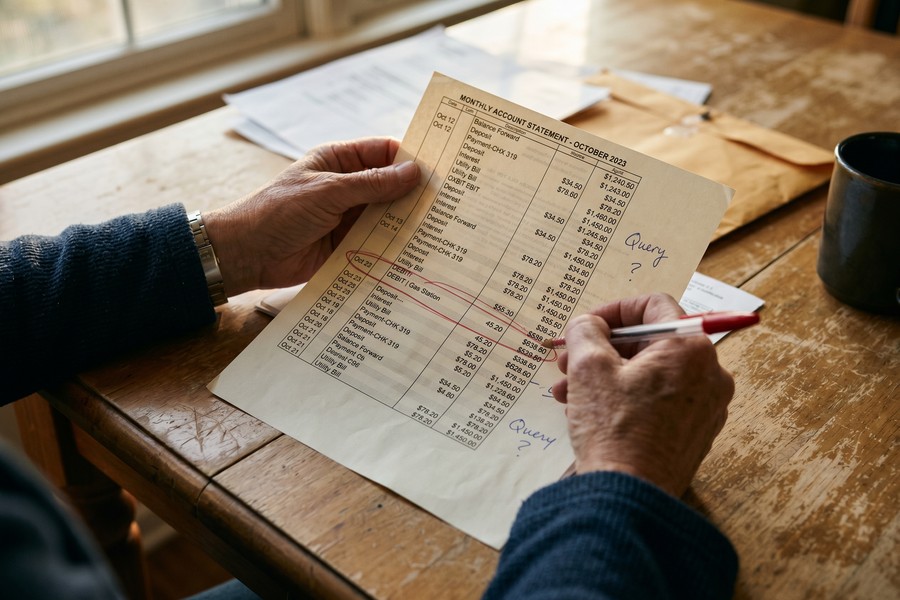
Real-World Example: Maria’s $18,500 Foundation Repair Decision
Maria, a 44-year-old school administrator in Columbus, Ohio, discovered a significant crack in her basement foundation during a heavy rain season. Three contractor quotes came in at $16,000, $17,800, and $19,200. She chose the middle contractor at $17,800 but needed to move fast — further water intrusion risked damaging her finished basement, which she estimated at $12,000 in additional exposure.
Maria had a 694 credit score and approximately $55,000 in home equity. She initially leaned toward a personal loan for speed. After prequalifying at three online lenders, her best personal loan offer was $18,500 at 16.4% APR over 60 months — a monthly payment of $451 and total interest of $8,560. She then checked her credit union’s HELOC rate: 9.25% variable with a $750 setup cost. At the same payoff horizon, her total interest on the HELOC was approximately $4,700, plus the $750 fee — $5,450 total versus $8,560 for the personal loan, a $3,110 difference.
The trade-off was a 3-week wait for the HELOC to close. After confirming the contractor could schedule the work start for the following month, Maria chose the HELOC. She drew $18,500 at closing and made fixed voluntary payments as if it were a term loan to avoid variable rate exposure. The foundation was repaired on schedule, water intrusion stopped, and her finished basement sustained no additional damage.
Maria’s total net savings versus the personal loan: $3,110 in interest, minus the $750 setup cost, equals $2,360. That’s a meaningful outcome from 30 minutes of comparison shopping and a willingness to wait 3 weeks for a non-emergency draw. Her advice: “Get the HELOC quote. Most people don’t bother, and it cost me nothing to check.”
Your Action Plan
-
Assess the urgency and true cost of the repair
Before pursuing any financing, get 2–3 written contractor quotes and establish whether the repair is a true emergency (requiring funding in 48–72 hours) or a planned project that allows time to optimize your financing. Urgency determines which loan products are viable.
-
Pull your credit report and know your score
Use AnnualCreditReport.com to get your free reports from all three bureaus. Check for errors, disputed items, or derogatory marks close to expiring. Know your score before any lender sees it — surprises cost money.
-
Calculate your available home equity
Get a rough estimate of your home’s current value (use Zillow or Redfin for a starting point) and subtract your current mortgage balance. If the result is at least 20% of the home’s value, you have meaningful equity to leverage for better rates. If equity is minimal, pivot to personal loan or FHA Title I options.
-
Search for government and local assistance programs first
Before borrowing a dollar, spend 20 minutes on Benefits.gov and your state’s housing finance agency website. FHA Title I, USDA Section 504, and dozens of state-level programs may cover part or all of your repair costs at below-market rates — or as outright grants for qualifying households.
-
Prequalify with at least three online lenders simultaneously
Use soft-pull prequalification tools at multiple online lenders to gather competing rate offers without damaging your credit. Compare APRs (not just interest rates), origination fees, repayment terms, and prepayment policies. This process takes under an hour and routinely saves thousands.
-
Calculate the true total cost of each option
Multiply your monthly payment by the number of months for each offer. Add any origination or closing fees. Compare these total-cost figures — not just monthly payments. A lower monthly payment on a longer term often means paying significantly more overall.
-
Confirm contractor terms before finalizing financing
Know exactly when the contractor needs payment and in what form. Some contractors require a deposit at signing and the balance on completion. Your loan disbursement timeline must align with these payment milestones — misalignment can delay your project or trigger contractor penalties.
-
Submit your formal application and lock your rate
Once you’ve selected the best product for your situation, complete the formal application with all required documentation. For variable-rate products, understand when your rate is set and whether you can request a rate lock. For personal loans, confirm the exact APR and total cost in the loan agreement before signing.
Frequently Asked Questions
What credit score do I need to get an online loan for home repairs?
Most online lenders accept borrowers with credit scores as low as 580–600, though rates at that level are significantly higher — typically 25%–36% APR. Borrowers with scores above 680 access meaningfully better rates in the 9%–18% range, and those above 740 qualify for the most competitive offers starting around 6.99%–8%. If your score is below 620, consider secured loan options or FHA programs before taking an unsecured personal loan at peak rates.
How fast can I actually get funded for a home repair emergency?
Many online lenders advertise same-day or next-day funding, but the actual timeline depends on when you apply and how quickly you submit documentation. Applications completed before noon on a business day with clean documentation can often result in funding within 24 hours. More complex income situations or weekday-evening applications may push funding to the second or third business day. For true emergencies, contact your top two or three lenders and ask directly about their realistic funding window for your scenario.
Can I get a home repair loan with no equity in my home?
Yes. Unsecured personal loans don’t require home equity at all — they’re based entirely on creditworthiness. Additionally, the FHA Title I loan program provides up to $7,500 unsecured (no equity required) and up to $25,000 with a lien on the property. These are your primary options if you’ve recently purchased and haven’t built substantial equity yet.
Is contractor financing (like from a roofing or HVAC company) ever a good idea?
Contractor financing can be convenient but is rarely the most cost-effective option. Rates are often higher than what you’d find through an online lender, and promotional deferred-interest terms carry significant risk — if you don’t pay the balance in full during the promotional window, retroactive interest at 26%–29% is applied to the original amount. Use contractor financing only if you have no alternatives and can guarantee full payoff before the promotional period ends.
What’s the difference between an FHA 203(k) loan and an FHA Title I loan?
The FHA 203(k) loan is a purchase-and-renovation mortgage — it’s designed for buyers financing both a home purchase and needed renovations in a single mortgage product. The FHA Title I loan is for existing homeowners who need repair funding without refinancing their current mortgage. If you already own your home and need repair money, FHA Title I is the relevant program. If you’re buying a fixer-upper, 203(k) is the tool.
Does using a personal loan for home repairs affect my taxes?
Interest paid on unsecured personal loans is not tax-deductible, regardless of how the funds are used. However, interest paid on home equity loans and HELOCs used for home improvements may be deductible if the loan is secured by your home and funds are used to “buy, build, or substantially improve” the qualifying residence — subject to the current $750,000 mortgage debt limit. Consult a tax professional for your specific situation, especially if you have complex ownership or income circumstances.
How do I avoid borrowing more than I need for a repair?
Start with at least two contractor quotes to establish a realistic cost range, then add a 10%–15% contingency buffer for scope creep — not more. Over-borrowing on a fixed personal loan means paying interest on idle funds. For HELOCs and lines of credit, draw only what you need as work progresses rather than drawing the full available amount at closing. Keeping the loan amount as tight as possible minimizes total interest paid over the repayment period.
Will a home repair loan hurt my credit score?
Applying for a loan triggers a hard inquiry, which may temporarily reduce your score by 5–10 points. However, once the loan is established and you make on-time payments, it adds a positive payment history record that helps your score over time. Opening a new installment loan also diversifies your credit mix, which is a minor positive factor. The net credit impact of a well-managed home repair loan over 12+ months is typically positive, not negative.
Can I use a personal loan to pay a contractor in installments or does it come as a lump sum?
Personal loan proceeds are disbursed as a lump sum to your bank account — you then pay the contractor on whatever schedule you negotiate with them. This gives you flexibility and puts you in the position of a cash buyer with the contractor, which can sometimes improve your negotiating position on the project price. Home equity loans are also disbursed as lump sums. HELOCs allow draw flexibility, making them naturally suited to phased payment schedules.
What happens if my repair costs more than my loan after work begins?
If scope creep pushes costs above your original loan amount, you have several options: negotiate with the contractor to phase the remaining work, use a credit card for the overage and pay it off quickly, or apply for a supplemental personal loan. If you used a HELOC, you can simply draw additional funds up to your credit limit. Planning a 10%–15% buffer into your initial loan amount is the simplest way to avoid this situation entirely.
Sources
- U.S. Census Bureau — Characteristics of New Housing: Cost Highlights
- Harvard Joint Center for Housing Studies — Improving America’s Housing 2023
- Federal Reserve — Report on the Economic Well-Being of U.S. Households (2023)
- U.S. Department of Housing and Urban Development — FHA Title I Property Improvement Loans
- USDA Rural Development — Section 504 Home Repair Program
- Benefits.gov — Federal Housing Assistance Programs
- AnnualCreditReport.com — Free Credit Reports (Official Site)
- TransUnion — Consumer Lending Industry Insights Report
- Bankrate — Average Personal Loan Interest Rates 2024
- LendingTree — Personal Loan Statistics and Trends
- Consumer Financial Protection Bureau — What Is a Home Equity Loan?
- National Association of Home Builders — Housing Economics Research
- Internal Revenue Service — Tax Topic 505: Interest Expense Deductions