
Quick Answer
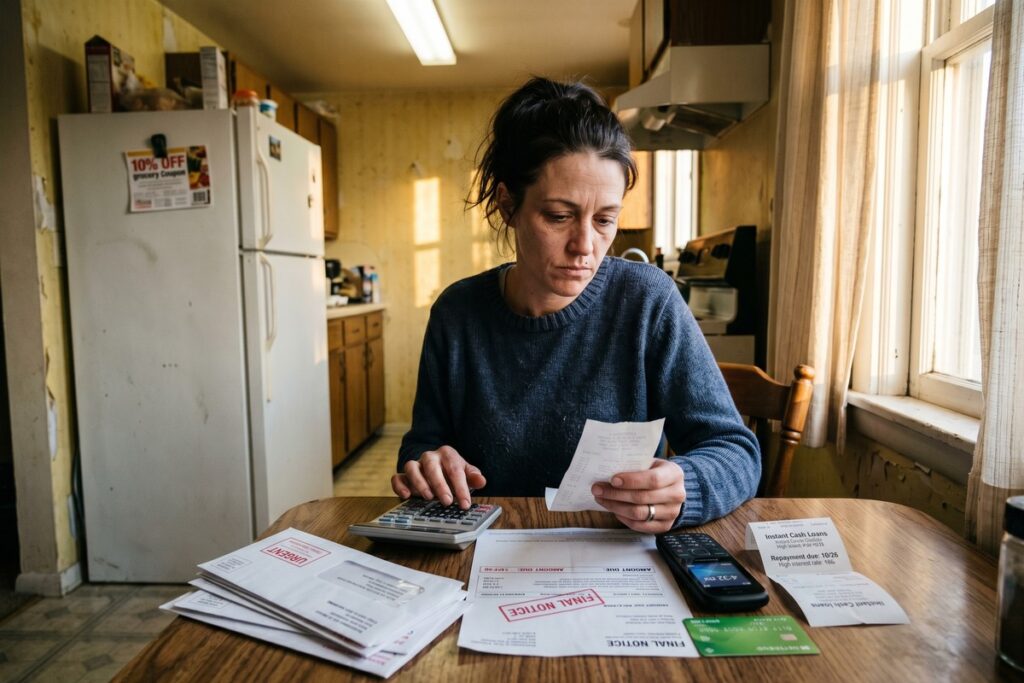
The cost of being poor is measurably higher than most people realize. Low-income households pay up to 400% APR on payday loans, spend more per unit on food due to limited bulk-buying power, and face insurance premiums 20–50% higher than wealthier zip codes. As of July 2025, these systemic financial penalties trap millions in cycles of compounding disadvantage.
The cost of being poor is not just about having less money — it is about paying more for the same goods, services, and credit that higher-income households access cheaply. According to Pew Research Center data, households earning under $30,000 annually devote a disproportionate share of income to fees, interest, and premium pricing that wealthier consumers never encounter.
This is not a behavioral failure. It is a structural one — and understanding it is the first step toward dismantling it.
Why Do Low-Income Borrowers Pay More for Credit?
Low-income borrowers pay dramatically higher interest rates because lenders price risk using credit scores — and lower scores correlate strongly with lower income. The result is a feedback loop: poverty causes poor credit, and poor credit makes poverty more expensive.
Payday lenders, which disproportionately serve low-income communities, charge fees that translate to annual percentage rates of 300% to 400%, according to the Consumer Financial Protection Bureau (CFPB). A two-week $300 payday loan at a typical $15-per-$100 fee costs $45 in interest — more than most premium credit cards charge in a month.
The Credit Score Penalty
The three major credit bureaus — Equifax, Experian, and TransUnion — use scoring models developed by FICO that weigh payment history, utilization, and credit age. Low-income individuals often lack the credit depth to score well, even with consistent on-time payments. Understanding how to read a credit report is a critical first step toward escaping this cycle, yet it is a skill rarely taught in low-income communities.
Those with scores below 600 face significantly narrower borrowing options. For a detailed breakdown of what those options actually look like, see our guide on online loans for borrowers with scores under 600.
Key Takeaway: Payday lenders charge 300–400% APR on short-term loans, according to the CFPB. Low-income borrowers who cannot access mainstream credit pay this premium repeatedly, compounding the financial cost of being poor over time.
Do the Poor Pay More for Food and Basic Goods?
Yes — low-income households consistently pay more per unit for food and household essentials because they lack access to bulk retailers, face food desert geography, and cannot afford the upfront cost of bulk purchasing even when stores are accessible.
The USDA Economic Research Service has documented that food prices in low-income urban neighborhoods are often 3–37% higher than in wealthier suburban areas, depending on the product category. Without a car, without refrigerator space, and without a credit card to float a Costco run, buying small quantities at corner stores becomes the only option — and small quantities cost more per ounce.
The Poverty Premium on Utilities
Low-income renters also face a utility poverty premium. Without the capital to invest in energy-efficient appliances or proper home insulation — benefits that accrue almost exclusively to homeowners — they pay higher electricity and heating bills per square foot. The U.S. Department of Energy’s Weatherization Assistance Program exists specifically to address this gap, yet it reaches only a fraction of eligible households annually.
Key Takeaway: Food prices in low-income neighborhoods run up to 37% higher per unit than in wealthier areas, per USDA data. This “poverty premium” on groceries alone can consume hundreds of extra dollars per year from already-stretched household budgets.
How Does Low Income Drive Up Insurance Costs?
Low-income households pay more for auto and renters insurance primarily because insurers use credit-based insurance scores — a practice legal in most U.S. states. Lower credit scores trigger higher premiums, even when driving records are clean.
A 2020 report by the Consumer Federation of America found that a low-income driver with a poor credit score could pay up to 103% more for auto insurance than an identical driver with excellent credit. This means the cost of being poor extends into a domain most people assume is purely risk-based.
“The use of credit scores in insurance pricing is one of the most regressive financial practices in America. It converts economic hardship directly into higher costs, creating a penalty for poverty that compounds annually.”
Renters insurance follows a similar pattern. Low-income renters in high-density urban areas often pay elevated premiums due to zip-code-level risk pooling — meaning their neighbors’ claims history inflates their own rates regardless of individual behavior.
| Expense Category | Low-Income Household Cost | Middle-Income Household Cost |
|---|---|---|
| Short-Term Credit (APR) | 300–400% (payday loan) | 20–30% (credit card) |
| Auto Insurance Premium | Up to 103% more with poor credit | Standard rate baseline |
| Grocery Cost per Unit | 3–37% higher (food deserts) | Bulk/suburban pricing |
| Banking Fees (annual) | $250+ (overdraft/check cashing) | $0–$60 (fee-waived accounts) |
| Utility Costs per Sq. Ft. | Higher (inefficient housing) | Lower (owned, insulated homes) |
Key Takeaway: Credit-based insurance scoring can increase auto insurance premiums by over 100% for low-income drivers, per the Consumer Federation of America. This practice effectively taxes poverty — and it is legal in 45 states.
What Do Banking Fees Cost the Unbanked and Underbanked?
An estimated 5.9 million U.S. households were unbanked in 2021, according to the FDIC’s National Survey of Unbanked and Underbanked Households. These households pay for every financial transaction that banked consumers receive for free.
Check-cashing services typically charge 1–5% of the check’s face value. On a $1,000 paycheck, that is up to $50 per pay period — or $1,300 per year — simply to access earned wages. Add money order fees, prepaid debit card fees, and wire transfer charges, and the total annual cost of being unbanked can exceed $2,400 according to estimates from the Financial Health Network.
Overdraft Fees as a Poverty Tax
For the underbanked — those with accounts but limited credit access — overdraft fees function as a stealth tax on low balances. The average overdraft fee in the U.S. is $26.61, according to Bankrate’s 2024 checking account survey. A single $20 overdraft triggering a $27 fee represents an effective APR exceeding 3,500% when annualized.
Those navigating irregular income — such as gig workers — are especially vulnerable to these cascading fees. Our guide on financial literacy for gig workers managing irregular income outlines strategies for minimizing exactly these kinds of structural penalties.
Key Takeaway: Unbanked Americans can pay over $2,400 annually in check-cashing and transaction fees, per the Financial Health Network. These costs represent a direct financial penalty for lacking bank access — a core dimension of the cost of being poor.
Is There a Hidden Time Cost That Amplifies Financial Poverty?
Yes — time poverty is one of the least-discussed dimensions of the cost of being poor. Low-income workers disproportionately hold jobs without paid leave, flexible scheduling, or remote-work options, making it costly to handle financial tasks during business hours.
Disputing a billing error, attending a loan closing, or visiting a bank branch all require time away from hourly-wage work. Each hour missed can mean lost income — sometimes exceeding the value of the financial task being completed. This creates a compounding disadvantage: the people most in need of financial management are least able to afford the time it requires.
Transportation Costs Compound the Problem
Low-income households without vehicles pay more for transportation to access banks, grocery stores, and medical care. In cities without robust public transit, a single round-trip to a financial services office can cost $20–$40 in rideshare fees. This makes understanding the true cost comparison of short-term vs. long-term borrowing especially relevant — because the wrong loan structure adds transportation and time costs on top of interest.
For households working toward financial stability, building even a small emergency fund is a foundational step. The question many face is covered in our breakdown of whether to pay off debt or build an emergency fund first.
Key Takeaway: Time poverty forces low-income workers to absorb financial losses — missing hourly wages to manage finances or traveling long distances to access services. Combined with direct fees, this hidden cost can add hundreds of dollars annually to the true cost of being poor.
Frequently Asked Questions
Why does being poor cost more money?
Being poor costs more because low income restricts access to cost-efficient options: bulk buying, mainstream credit, insulated housing, and fee-free banking. Each restriction forces substitution with more expensive alternatives — payday loans instead of credit cards, corner stores instead of wholesale clubs — creating a structural surcharge on low-income life.
What is the poverty premium and how much does it cost?
The poverty premium refers to the extra costs low-income households pay for identical or inferior goods and services compared to wealthier consumers. Estimates vary, but the combined annual penalty — covering credit, banking, insurance, and food — can exceed $3,000 to $5,000 per year for a household earning under $30,000.
Are payday loans really that much more expensive than credit cards?
Yes. The average credit card APR is approximately 21–24%. Payday loan APRs routinely reach 300–400%, according to the CFPB. On a $300 loan held for two weeks, a payday borrower may pay $45 in fees — a credit card user might pay under $1.50 for the same balance over the same period.
How do credit scores make poverty more expensive?
Credit scores influence the interest rate on loans, the premium on insurance policies, and even eligibility for utility deposits. Lower scores — which correlate with lower income — trigger higher costs in all three categories. This means the financial system charges more to people who can least afford it.
Can being unbanked really cost thousands of dollars a year?
Yes. The Financial Health Network estimates unbanked households spend over $2,400 annually on check-cashing, money orders, and transaction fees. This is money spent simply to access and move earned wages — services that cost banked consumers nothing or near-nothing.
What can low-income households do to reduce these financial penalties?
The most impactful steps include opening a Bank On-certified account (a low-fee account available through many community banks and credit unions), disputing inaccuracies on credit reports, and avoiding payday lenders by building even a small emergency reserve. Structural change requires policy intervention, but individual strategy can reduce some penalties meaningfully.
Sources
- Consumer Financial Protection Bureau (CFPB) — What Is a Payday Loan?
- FDIC — 2021 National Survey of Unbanked and Underbanked Households
- Bankrate — 2024 Checking Account and ATM Fee Survey
- U.S. Department of Energy — Weatherization Assistance Program
- Consumer Federation of America — Auto Insurance Affordability, Race, and Income
- USDA Economic Research Service — Food Security in the U.S.
- Financial Health Network — U.S. Financial Health Pulse Report