

Quick Answer
To get the best auto loans for teachers, start by checking union credit unions and employer partnerships, then compare teacher-specific rate discounts from lenders like DFCU Financial and PenFed Credit Union. As of July 2025, qualified educators can save 0.25%–1.00% on their APR through targeted programs, and some credit unions offer rates as low as 5.49% APR for members with good credit.
Finding the best auto loans for teachers means going beyond the dealership finance desk — educators have access to exclusive discounts, union-backed programs, and credit union partnerships that most never hear about. In July 2025, with the average new-car loan rate sitting at approximately 7.1% APR according to the Consumer Financial Protection Bureau, even a half-point reduction from a teacher-specific program can save hundreds over the life of a loan.
Teacher salaries have not kept pace with rising vehicle prices. The average new car now costs over $48,000, according to Kelley Blue Book’s 2025 market data, while the average teacher salary in the U.S. sits around $68,000 annually. That gap makes smart financing a necessity, not just a perk.
This guide is for K–12 teachers, college instructors, school administrators, and other education professionals who want to stretch their purchasing power when buying a car. By the end, you will know exactly which lenders offer teacher discounts, how to stack those benefits, and how to avoid the traps that cost educators the most money.
Key Takeaways
- Credit unions affiliated with education unions — such as DFCU Financial and SchoolsFirst Federal Credit Union — routinely offer APR discounts of 0.25%–0.50% below standard rates for qualifying educators, according to NCUA consumer resources.
- The National Education Association (NEA) Member Benefits program partners with select lenders to provide auto loan rate reductions and purchase discounts worth an average of $500–$1,500 off the vehicle price.
- Teacher loan forgiveness awareness is rising, but fewer than 12% of educators report knowing about auto loan discount programs available through their union, per a 2024 survey cited by NEA Today.
- Getting pre-approved before visiting a dealership reduces the average loan APR by 0.5%–1.2% because you negotiate from a position of strength, not dependency.
- Teachers with a credit score above 720 who use a credit union and present employment verification can qualify for the lowest advertised rates, typically in the 5.49%–6.50% APR range in mid-2025.
- Stacking benefits — such as combining a union discount, a loyalty rate from your credit union, and a manufacturer incentive — is legal and can reduce your total interest paid by $1,200 or more on a five-year loan.
In This Guide
- What auto loan programs are specifically designed for teachers?
- Which credit unions offer the best auto loan rates for educators?
- How do I qualify for teacher auto loan discounts?
- Can I stack teacher discounts with manufacturer incentives and other offers?
- How do I get pre-approved for an auto loan as a teacher?
- What are my options for auto loans as a teacher with bad credit?
- Frequently Asked Questions
Step 1: What Auto Loan Programs Are Specifically Designed for Teachers?
Several lenders and organizations run dedicated auto loans for teachers programs that the general public cannot access. These programs work through teacher unions, state education associations, and employer-sponsored financial wellness benefits.
The Major Teacher-Specific Programs to Know
The NEA Member Benefits Auto Program is one of the most widely available. It partners with TrueCar to give NEA members access to dealer pricing data and connects them with lenders offering preferred rates. Members report saving an average of $3,106 off MSRP on new vehicles through this program, according to NEA Member Benefits’ official program page.
The American Federation of Teachers (AFT) similarly offers a financial services partnership that includes auto loan referrals with rate discounts. State-level affiliates such as the California Teachers Association (CTA) and the New York State United Teachers (NYSUT) also run their own auto-buying and financing programs.
Many school districts also partner directly with local credit unions. If your district has a financial wellness program, it likely includes preferred auto loan rates as a benefit you are already entitled to use.
What to Watch Out For
Not every program advertised as a “teacher discount” is actually a direct rate reduction. Some are simply referral programs to dealerships that offer modest discounts on the vehicle price but standard market rates on financing. Always separate the vehicle price negotiation from the loan rate negotiation — they are two different deals.
The NEA has over 3 million members, making it the largest professional organization in the United States. Yet a significant share of those members never activate the financial benefits their dues help fund, including auto loan programs and rate discounts.

Step 2: Which Credit Unions Offer the Best Auto Loan Rates for Educators?
Education-focused credit unions consistently offer the most competitive auto loans for teachers. These institutions are member-owned, not-for-profit, and structured to return value to educators through lower rates and fewer fees.
Top Credit Unions for Teacher Auto Loans
SchoolsFirst Federal Credit Union, based in California, is the largest education-based credit union in the country. It offers new auto loan rates starting at 5.49% APR for members with excellent credit and loan terms up to 84 months. Membership is open to current and retired school employees and their families.
DFCU Financial, serving Michigan educators and others, advertises rate discounts specifically tied to employment in education. PenFed Credit Union (Pentagon Federal) also allows educators to join and regularly features new car loan rates in the 5.99%–6.74% APR range, plus an auto-buying service powered by TrueCar.
Alliant Credit Union is open to anyone who joins a partner organization — membership can cost as little as $5 — and it frequently ranks among the top three credit unions for auto loan rates nationally. For educators outside state-specific unions, Alliant is a practical nationwide option.
What to Watch Out For
Credit union rates are typically “as low as” figures reserved for borrowers with scores above 720–740. If your credit score is in the 660–700 range, expect your actual offered rate to be 1.5%–3% higher than the advertised floor. Still, credit union rates typically beat bank rates at every credit tier.
Join your education-focused credit union before you need the loan. Many credit unions require a minimum of 30–90 days of membership before approving auto loans at member rates. Opening an account early costs nothing and ensures you qualify when the time comes.
| Lender | Starting APR (New Car) | Max Loan Term | Teacher Eligibility | Min. Credit Score |
|---|---|---|---|---|
| SchoolsFirst FCU | 5.49% | 84 months | CA school employees only | 720+ |
| PenFed Credit Union | 5.99% | 84 months | Open membership | 700+ |
| Alliant Credit Union | 6.24% | 84 months | Open membership ($5 fee) | 700+ |
| DFCU Financial | 6.49% | 72 months | Educators + employer partners | 680+ |
| NEA Member Benefits / TrueCar Lenders | 6.74% | 72 months | NEA members nationwide | 660+ |
| Typical Bank (Chase, BofA) | 7.29%–8.49% | 72 months | No teacher discount | 660+ |
The rate difference between a credit union and a major bank might look small at first glance. On a $35,000 loan over 60 months, the difference between 5.49% and 7.99% APR is roughly $2,320 in total interest — a meaningful amount on a teacher’s salary.
Step 3: How Do I Qualify for Teacher Auto Loan Discounts?
Qualifying for teacher auto loan discounts requires documentation of your employment status and, in most cases, active membership in a qualifying union or credit union. The process is straightforward but requires preparation.
Documents You Will Need
Most lenders require the following to unlock educator-specific rates:
- Current pay stub showing school district or institution as employer
- Employment verification letter on school letterhead (some lenders accept a school ID)
- Proof of union membership (NEA, AFT, or state affiliate membership card)
- Credit union membership account number (if applying through a CU)
- Government-issued ID and Social Security number for credit pull
Part-time teachers, adjunct faculty, and substitute teachers may face additional requirements. Some credit unions require at least 20 hours per week of educational employment to qualify for member-exclusive rates.
How to Do This
Start by logging into your union’s member portal. NEA members can access the auto program through NEA Member Benefits (neamb.com). From there, use the vehicle search tool to identify dealerships offering member pricing, and request a rate quote through the affiliated lending partner.
Separately, contact your education-focused credit union directly and ask a loan officer about any “educator rate” or “school employee discount” programs. These are not always advertised online — they are sometimes applied only when you ask.
What to Watch Out For
Discounts tied to union membership only apply while your membership is active. If you let your dues lapse mid-loan, you will not lose your locked-in rate — but you will lose eligibility for any future refinancing discounts from that program. Keep your membership current, especially if you plan to refinance within the first two years.
Teachers who financed through an education credit union instead of a dealership-arranged loan saved an average of $1,847 in interest over the loan term, based on rate differential analysis from NCUA credit union research data.
“Most teachers walk into a dealership not knowing they already have access to pre-negotiated rates through their union. The dealership finance office has no incentive to tell you that. You have to come in knowing what you qualify for and present your pre-approval upfront.”
Step 4: Can I Stack Teacher Discounts With Manufacturer Incentives and Other Offers?
Yes — stacking teacher discounts with other available offers is completely legal and one of the most effective ways to maximize savings on auto loans for teachers. The key is understanding which offers can be combined and which are mutually exclusive.
How to Stack Benefits Legally
There are three separate layers of savings to pursue simultaneously:
- Vehicle price discounts: NEA or AFT member pricing through TrueCar, manufacturer loyalty programs, or fleet/group pricing through your school district.
- Financing rate discounts: Credit union educator rates or union-affiliated lender programs.
- Manufacturer financing incentives: Zero-percent or low-APR deals offered by automaker captive finance arms like Ford Motor Credit or Toyota Financial Services.
Layers 1 and 2 almost always stack together. The complication arises with Layer 3. Manufacturer 0% APR offers are typically only available through the automaker’s own financing arm, which means you cannot use your credit union rate at the same time. You will need to run the math: sometimes a 0% manufacturer deal beats a credit union rate on a lower negotiated price; other times, the credit union rate wins.
What to Watch Out For
Dealer financing through a manufacturer’s captive lender sometimes requires you to forfeit a cash-back incentive to get the 0% rate. On a $40,000 vehicle, a $3,000 cash-back offer combined with a 5.49% credit union rate can cost less in total than 0% financing with no rebate. Always calculate the total amount paid over the loan, not just the monthly payment. You can learn more about these traps in our guide to common dealership financing mistakes to avoid.
Never let a dealership “pack” add-on products like extended warranties or GAP insurance into your loan without separately pricing them. These products are often marked up by 200%–400% over cost and roll into your principal, negating every discount you worked to secure. Review our breakdown of whether GAP insurance is worth it on an auto loan before agreeing to anything.
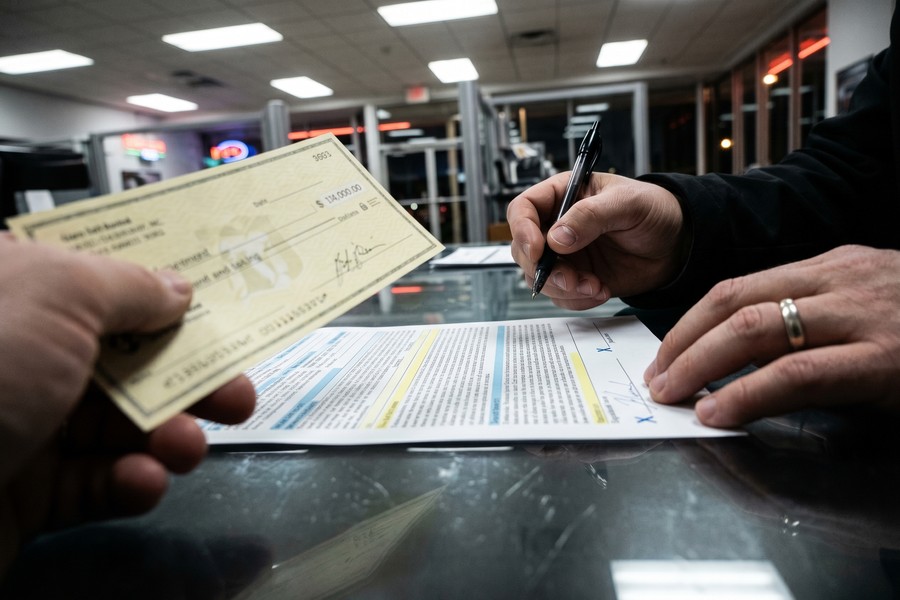
Step 5: How Do I Get Pre-Approved for an Auto Loan as a Teacher?
Getting pre-approved before stepping onto a car lot is the single most powerful move a teacher can make in the financing process. Pre-approval gives you a concrete rate offer and transforms you from a financing dependent into a cash buyer in the dealer’s eyes.
How to Do This
Start by checking your credit score for free through AnnualCreditReport.com, the federally mandated free report portal. You are entitled to one free report per bureau per year. Review it for errors — a single incorrect missed payment can cost you 50–100 points on your credit score.
Next, apply for pre-approval at your education credit union and at one or two other lenders (such as PenFed or Alliant) within a 14-day window. Rate-shopping inquiries within this window count as a single hard inquiry under FICO’s scoring model, protecting your credit score.
Understanding the difference between pre-approval and pre-qualification is important before you start. Our breakdown of auto loan pre-approval vs. pre-qualification explains what each actually means for your negotiating position and credit score.
What to Watch Out For
Pre-approval letters typically expire in 30–60 days. Do not apply too early if you are still months away from buying. Also, your pre-approved rate is a ceiling, not a floor — the dealer or another lender can beat it, but they must beat it on paper before you sign anything.
When you present your pre-approval letter at the dealership, tell the finance manager: “I have financing arranged at X percent — can you beat it?” This one sentence puts pressure on the dealer to compete for your loan rather than simply assigning you whatever rate earns them the highest backend commission.
“Teachers often underestimate how much leverage they have as borrowers. Stable government employment, predictable income, and low job-loss risk make educators very attractive to lenders. That creditworthiness should translate into better rates — but only if the teacher shops around and asks for them.”
Step 6: What Are My Options for Auto Loans as a Teacher With Bad Credit?
Teachers with damaged credit still have viable paths to vehicle financing, including several options that account for the stability of public-sector employment even when credit scores fall below the prime threshold.
Options for Educators With Credit Scores Below 660
Education credit unions are often more flexible than banks with members who have impaired credit. Because they can see your full relationship — including direct deposit of your paycheck into your credit union account — they have more context than a bank making a cold decision. A debt-to-income ratio below 40% and steady paycheck history can offset a lower credit score at many credit unions.
Some state teacher retirement systems also sponsor financial wellness programs that include partnerships with subprime-friendly credit unions. For example, several affiliates of the National Retirement Teachers Association (NRTA) have lender partnerships specifically for members transitioning on fixed incomes or rebuilding credit.
A larger down payment dramatically improves your approval odds and lowers your rate. Putting down 15%–20% on a used vehicle reduces lender risk substantially. Pairing that with a creditworthy co-signer — ideally a spouse or family member with a 700+ score — can bring your rate down by 2%–4% APR.
What to Watch Out For
Avoid buy-here-pay-here dealerships as a first resort. These lots typically charge rates of 18%–29% APR, do not report to credit bureaus (so the loan does not help rebuild your credit), and frequently place GPS trackers on vehicles for repossession purposes. They are a last resort, not a first step. If you are starting from scratch with credit, review our guide to getting your first auto loan with no credit history for more foundational strategies.
If high-rate debt from a previous vehicle is part of a broader financial challenge, it may also be worth exploring whether refinancing your auto loan when rates drop is a viable strategy once your credit improves over 12–18 months.

Frequently Asked Questions
Do teachers get special interest rates on car loans automatically?
No — teacher auto loan discounts are not automatic. You must actively apply through a qualifying credit union, union benefits program, or employer-affiliated lender and provide documentation of your employment. Rates are not adjusted at the dealer level unless you bring a pre-approval from an educator-specific lender.
What credit score do I need to get the best auto loan rate as a teacher?
Most education credit unions advertise their lowest rates for borrowers with credit scores of 720 or higher. With a score in the 680–719 range, you will typically qualify for rates 1%–2% higher than the advertised floor. Scores below 660 shift you into near-prime territory where rates climb significantly, though union membership and employment stability can still help.
Can part-time or substitute teachers get educator auto loan discounts?
It depends on the lender. Many education credit unions allow part-time school employees to join and access member rates. However, some union-affiliated programs require full-time employment or active dues-paying membership in a specific union. Call the lender directly and ask whether your employment classification qualifies before spending time on an application.
Is it better to finance through a credit union or through the car dealership as a teacher?
In most cases, financing through an education credit union is better for teachers than using dealer-arranged financing. Credit unions operate as not-for-profit entities and do not earn a commission on loan rate markups the way dealer finance offices do. The exception is when a manufacturer offers a zero-percent APR deal — but even then, you should calculate total cost including any rebate you forfeit to get that rate.
What happens to my teacher auto loan if I leave teaching?
Your existing loan terms are locked in and will not change if you leave teaching mid-loan. The rate you signed for stays in place. You will, however, lose eligibility for member-only benefits (like refinancing discounts) if your union membership lapses after you change careers. Nothing retroactively changes on your current loan.
How do I find out if my school district has an auto loan partnership?
Contact your district’s HR department or employee benefits coordinator. Ask specifically about “financial wellness benefits” or “preferred lender partnerships.” Many districts have credit union relationships that are not advertised prominently. Your union rep is also a good resource — state affiliates of the NEA and AFT maintain updated lists of financial benefits available to members.
Should I choose a new or used car to maximize my auto loan savings as a teacher?
Used cars under $25,000 often make more financial sense for teachers on a budget, because a smaller loan principal means less total interest paid even at a slightly higher used-car APR. The price gap between new and used vehicles remains wide in 2025. Our full breakdown of new vs. used car loans and which actually saves more money can help you run the numbers for your specific situation.
Can I refinance my current auto loan to get a teacher discount rate?
Yes. If you financed through a dealership or bank and later join an education credit union, you may be able to refinance your existing loan at a lower member rate. This works best if rates have dropped or your credit has improved since your original financing. Most credit unions allow refinancing of loans held at other institutions, and the process typically takes 1–3 business days once you submit documentation.
Are there auto loan programs specifically for first-year teachers with limited credit history?
Several education credit unions have first-job or new-member loan programs designed for recent graduates entering teaching. These programs weigh your employment contract and projected income more heavily than your short credit history. Bringing a copy of your signed teaching contract, proof of enrollment in the state pension system, and any existing accounts at the credit union strengthens your application significantly.
Sources
- Consumer Financial Protection Bureau — Auto Loan Trends Data
- Kelley Blue Book — Average New Car Transaction Price Report 2025
- NEA Member Benefits — Auto Buying Program Overview
- NEA Today — Financial Wellness Survey for Teachers
- National Credit Union Administration — Consumer Financial Literacy Resources
- AnnualCreditReport.com — Free Federal Credit Report Portal
- U.S. Bureau of Labor Statistics — Teacher Salary and Employment Data
- American Federation of Teachers — Member Financial Benefits Overview
- MyFICO — How Rate Shopping Affects Your Credit Score
- Consumer Reports — How to Get the Best Auto Loan Rate