

Quick Answer
Pursuing student loans for a second bachelor’s degree in July 2025 is possible but comes with tighter federal limits. Undergraduate borrowers face a $57,500 lifetime cap on federal Direct Loans, and prior borrowing counts against that ceiling. Most second-degree seekers exhaust federal aid quickly and must combine remaining federal eligibility, institutional aid, and private loans to cover costs.
Getting student loans for a second bachelor’s degree follows different rules than financing your first undergraduate program — and most borrowers are caught off guard by how much of their federal eligibility is already gone. As of July 2025, the U.S. Department of Education applies your lifetime Direct Loan limits across every degree you pursue, meaning dollars borrowed for your first bachelor’s reduce exactly what you can borrow for your second. Independent students hit a hard ceiling of $57,500 in total federal undergraduate borrowing, with no exceptions for starting a new program.
Demand for second bachelor’s degrees has grown sharply as career-changers seek credentials in healthcare, technology, and education — fields where a specific undergraduate degree is a hiring requirement, not just a preference. The National Center for Education Statistics reports that adult learners over age 25 now make up more than 38% of all college enrollment, and many of them are returning to earn a second degree rather than a graduate credential.
This guide is for anyone who already holds a bachelor’s degree and is seriously considering going back for a second undergraduate credential. You will learn exactly how federal loan eligibility is calculated for repeat undergraduates, which loan types are still available to you, how to supplement limited federal aid with institutional and private options, and what repayment strategies apply to your unique situation.
Key Takeaways
- The federal lifetime undergraduate loan limit is $57,500 for independent students, and any loans from your first degree count against this ceiling, per Federal Student Aid.
- Subsidized loan eligibility for a second bachelor’s degree is capped at a combined $23,000 lifetime maximum for subsidized funds, shared across all undergraduate study, according to Federal Student Aid.
- Pell Grants carry a lifetime eligibility limit equivalent to 6 full years (12 semesters) of full-time enrollment; prior Pell use directly reduces what remains for a second degree, per the Federal Pell Grant program page.
- Private student loan rates for undergraduate borrowers averaged between 4% and 16% APR in 2025, depending on credit history and whether a co-signer is used, according to NerdWallet’s 2025 private loan rate data.
- Second-degree seekers who qualify as independent students unlock higher annual borrowing limits — up to $12,500 per year — compared to the $7,500 cap for dependents at the junior/senior level, per Federal Student Aid annual limits.
- Completing the FAFSA each academic year remains mandatory even for second-degree borrowers; skipping it forfeits access to any remaining federal aid eligibility, warns the Federal Student Aid FAFSA portal.
In This Guide
- Step 1: Am I still eligible for federal student loans for a second bachelor’s degree?
- Step 2: How much can I actually borrow in federal loans for a second undergraduate degree?
- Step 3: Can I get Pell Grants or other federal grants for a second bachelor’s degree?
- Step 4: How do I fill the funding gap with private student loans as a second-degree student?
- Step 5: What repayment options apply to student loans for a second bachelor’s degree?
- Frequently Asked Questions
Step 1: Am I Still Eligible for Federal Student Loans for a Second Bachelor’s Degree?
Yes — you can still receive federal student loans for a second bachelor’s degree, but only if you have not already reached the lifetime borrowing limits set by the U.S. Department of Education. Your remaining eligibility is calculated by subtracting every federal loan you borrowed during your first degree from the applicable lifetime cap.
How to Determine Your Remaining Federal Eligibility
Log in to the Federal Student Aid Aid Summary page using your FSA ID to see your exact cumulative federal loan balance. The system shows your total outstanding principal and fees, which your school’s financial aid office then uses to calculate how much additional federal Direct Loan funding you can receive before hitting the ceiling.
Students pursuing a second bachelor’s degree are still classified as undergraduate borrowers — not graduate students — for loan purposes. That distinction matters because graduate Direct Unsubsidized Loans carry a separate, higher limit of $138,500 total (including undergraduate borrowing), but you only access that pool by enrolling in a graduate or professional program. A second bachelor’s keeps you in the undergraduate pool with its lower caps.
What to Watch Out For
Some schools will require you to re-enroll as a non-degree-seeking student if you already hold a bachelor’s from the same institution. Non-degree enrollment can disqualify you from federal Title IV aid entirely. Confirm your enrollment classification in writing with the financial aid office before committing to any program.
If you previously defaulted on federal student loans from your first degree, you are ineligible to receive new federal aid until you resolve the default through loan rehabilitation or consolidation. Check your status at StudentAid.gov before applying.
Step 2: How Much Can I Actually Borrow in Federal Loans for a Second Undergraduate Degree?
The maximum you can borrow depends on two variables: your dependency status and how much you already borrowed during your first degree. Federal Direct Loan limits for undergraduate students are fixed by Congress and do not reset when you start a new program.
Breaking Down the Lifetime Limits
For dependent undergraduate students, the lifetime Direct Loan limit is $31,000, of which no more than $23,000 can be subsidized. For independent undergraduate students — which many second-degree seekers qualify as, given that most are working adults over age 24 — the cap rises to $57,500 total, with the same $23,000 subsidized ceiling. The difference between what you have borrowed and the applicable cap is what remains available to you for your second degree.
Annual limits also apply on top of lifetime caps. Independent students at the junior and senior level can borrow up to $12,500 per year in combined subsidized and unsubsidized Direct Loans. Of that, no more than $5,500 can be subsidized. If your program is only two years long and you have sufficient remaining lifetime eligibility, the annual cap — not the lifetime cap — may be the binding constraint.
How to Do This
Ask your financial aid office for a formal “remaining eligibility” calculation before the academic year begins. Provide them with your Federal Student Aid Aid Summary printout. They will confirm your grade level for loan purposes and apply any school-specific policies that may further restrict your borrowing.
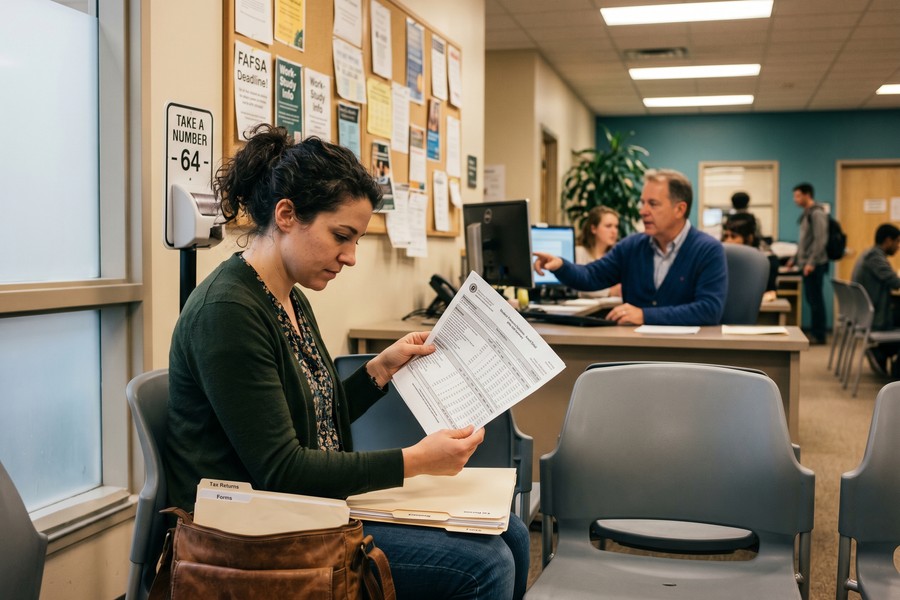
A student who borrowed the full dependent limit during their first degree — $31,000 — and then returns as an independent student for a second bachelor’s has up to $26,500 in remaining federal eligibility before hitting the $57,500 independent lifetime cap. That gap may sound large, but it typically covers only one to two years of tuition at a public university.
| Borrower Type | Annual Limit (Jr/Sr Year) | Lifetime Total Cap | Subsidized Cap (Lifetime) | Typical Remaining After First Degree |
|---|---|---|---|---|
| Dependent Undergraduate | $7,500 | $31,000 | $23,000 | $0 to $10,000 |
| Independent Undergraduate | $12,500 | $57,500 | $23,000 | $5,000 to $26,500 |
| Graduate/Professional (for reference) | $20,500 | $138,500 (incl. undergrad) | Not eligible | N/A — requires grad enrollment |
Graduate Direct PLUS Loans are not available for second bachelor’s degree students because PLUS eligibility at the graduate level requires enrollment in a graduate or professional program. Parent PLUS Loans remain available if a dependent student’s parent applies, though many second-degree seekers are independent and therefore ineligible for parent-based aid.
If you are 24 or older, married, a veteran, or legally emancipated, you automatically qualify as an independent student on the FAFSA — unlocking the higher $57,500 lifetime limit. Confirm your status using the Federal Student Aid dependency status guide before submitting your FAFSA.
Step 3: Can I Get Pell Grants or Other Federal Grants for a Second Bachelor’s Degree?
Federal Pell Grants are technically available for a second bachelor’s degree — but only if you have remaining Pell lifetime eligibility and demonstrate sufficient financial need through the FAFSA. Most borrowers who received substantial Pell funding during their first degree have little to no eligibility left.
How Pell Lifetime Eligibility Works
Every student receives a maximum of 12 semesters (or the equivalent) of Pell Grant funding over their lifetime, regardless of the number of degrees pursued. Each semester you received any Pell funding counts against this ceiling. If your first four-year degree consumed eight full semesters of Pell, you have four semesters remaining — potentially enough to fund roughly two years of a second degree if you still qualify based on income.
The 2024–25 maximum Pell Grant award is $7,395 per year, according to Federal Student Aid’s Pell Grant overview. Part-time students receive prorated amounts. Second-degree seekers who qualify for the maximum award and have remaining eligibility can meaningfully offset costs — but this is uncommon for students who completed a full first degree on Pell funding.
Other Grant Sources Worth Exploring
Many states offer their own need-based grant programs that parallel Pell and do not share the federal lifetime cap. Programs like the Cal Grant in California and the Texas Grant in Texas evaluate eligibility independently. Check your state higher education agency’s website for specific rules about second-degree applicants.
Institutional grants from the school itself are often the most overlooked source of funding for second-degree students. Some colleges actively recruit career-changers and offer merit scholarships specifically for students re-entering undergraduate education. A conversation with the financial aid office — not just a review of the published aid packages — frequently uncovers these options. For more strategies on maximizing institutional aid, see our guide on common financial aid mistakes that cost students thousands.
The TEACH Grant program offers up to $4,000 per year to students pursuing education degrees who commit to teaching in high-need subjects at low-income schools. Second-degree students entering teacher education programs may qualify — and unlike loans, TEACH Grants do not require repayment if service obligations are met. Learn more at the Federal Student Aid TEACH Grant page.
“Many second-degree students assume they have no grant eligibility left, but they never check their remaining Pell semesters. Even two or three semesters of Pell Grant money can reduce the loan burden significantly — and that is money that never has to be repaid.”
Step 4: How Do I Fill the Funding Gap With Private Student Loans as a Second-Degree Student?
Private student loans are the primary tool most second-degree borrowers use to bridge the gap between limited federal aid and actual program costs. Unlike federal loans, private loans are underwritten based on your creditworthiness — meaning your income, credit score, and debt-to-income ratio all determine your rate and approval odds.
How to Do This
Start by comparing offers from at least three lenders before accepting any private loan. Major private lenders for undergraduate borrowers include Sallie Mae, College Ave, Earnest, Ascent Funding, and Discover Student Loans. Each uses different underwriting criteria, and your rate can vary by several percentage points between lenders on the same loan amount.
Private undergraduate loan rates in 2025 range from roughly 4% to 16% APR, depending on credit profile and co-signer status, according to NerdWallet’s 2025 private student loan rate data. Borrowers with strong credit scores — generally 700 or above — qualify for rates at the lower end of that range. Those without an established credit history or strong income may need a co-signer to access competitive rates at all.
What to Watch Out For
Private loans do not carry the federal protections that come with Direct Loans. They are generally ineligible for income-driven repayment plans, Public Service Loan Forgiveness, and federal deferment and forbearance programs. Borrowers who anticipate unstable income after graduation — common among career-changers — should maximize federal borrowing before turning to private options.
If you have already refinanced previous student loans into a private loan, those funds also lost their federal protections. For context on what happens when you move federal loans into private hands, our article on private student loan refinancing options covers the trade-offs in detail.

Adding a creditworthy co-signer to a private loan application can reduce your interest rate by 2 to 4 percentage points in many cases — potentially saving thousands over a five-year repayment term. Many lenders also offer co-signer release after 12 to 24 consecutive on-time payments, giving your co-signer a defined exit path.
Step 5: What Repayment Options Apply to Student Loans for a Second Bachelor’s Degree?
Federal loans borrowed for a second bachelor’s degree enter the same repayment system as your earlier federal loans — but your combined balance may now qualify you for income-driven repayment plans with lower monthly payments. Your private loans require separate repayment under the terms of your individual loan agreement.
Federal Repayment Plans Available to You
If your combined federal student loan balance exceeds $30,000, you automatically qualify for Extended Repayment, which spreads payments over up to 25 years. More importantly, income-driven repayment (IDR) plans — including SAVE (Saving on a Valuable Education), IBR (Income-Based Repayment), and PAYE (Pay As You Earn) — cap monthly payments at a percentage of your discretionary income regardless of balance. Our deep-dive on how income-driven repayment plans actually work explains the payment calculations in plain language.
Federal loan servicer transfers can complicate repayment for borrowers who have been in the system for years. If your original loans were serviced by one company and new loans from your second degree are assigned to a different servicer, you will have two separate accounts to manage. Consolidating into a Direct Consolidation Loan can simplify this — though consolidation resets any progress toward IDR forgiveness. For a detailed walkthrough of what to do when your servicer changes, see our guide on handling a student loan servicer transfer.
Public Service Loan Forgiveness and Second Degrees
Federal loans from your second bachelor’s degree are fully eligible for Public Service Loan Forgiveness (PSLF) if you work for a qualifying nonprofit or government employer. PSLF requires 120 qualifying monthly payments under an IDR plan while employed full-time by a qualifying employer. Second-degree holders entering healthcare, education, or public administration frequently qualify for this path. See our resource on student loan forgiveness programs for educators for profession-specific strategies.
What to Watch Out For
Borrowers who consolidate older loans with new second-degree loans must restart the PSLF payment counter from zero. If you are already partway through your 120 payments, avoid consolidating unless the simplification benefit clearly outweighs the forgiveness delay. Consult The Institute of Student Loan Advisors (TISLA) at no cost for a personalized analysis before consolidating.
Borrowers carrying student loans from both a first and second bachelor’s degree with a combined balance over $50,000 may pay less per month under SAVE than under the standard 10-year plan — and any remaining balance is forgiven after 20 to 25 years of qualifying payments, per Federal Student Aid’s SAVE plan overview.
“Students pursuing a second bachelor’s degree often overlook how their prior loan history affects repayment strategy. If they have partial PSLF progress, consolidating new debt recklessly can cost them years of qualifying payments. The math needs to be done before any decisions are made.”

Frequently Asked Questions
Can I get federal student loans for a second bachelor’s degree if I already paid off my first loans?
Yes — paying off previous federal loans restores your ability to borrow up to the lifetime cap again. Lifetime limits are based on cumulative amounts borrowed, not current outstanding balances. If you borrowed $20,000 for your first degree and repaid it in full, you still have $37,500 remaining in federal independent undergraduate eligibility — and you can borrow up to that amount for a second degree.
Does my school’s financial aid office treat me differently as a second-degree student?
Yes, most schools apply specific institutional policies for second-degree students. Some institutions limit merit scholarships to first-time degree seekers. Others require second-degree applicants to enroll in a specific degree-completion track that affects aid eligibility. Always request a written financial aid package estimate before enrolling — verbal assurances are not binding.
What happens if I use up all my federal loan eligibility before finishing my second degree?
Once you exhaust your federal undergraduate lifetime limits, you can no longer receive new federal Direct Loans for undergraduate study. Your options become private student loans, employer tuition reimbursement programs, institutional payment plans, or scholarships. Planning your borrowing timeline carefully — ideally front-loading federal loans in earlier semesters — gives you the most flexibility if federal funds run short near the end of your program.
Should I get a second bachelor’s degree or a master’s degree if I want to change careers?
A second bachelor’s degree makes more sense when the new career requires a specific undergraduate credential — nursing, engineering, and many healthcare fields mandate it. A master’s degree is better when the career change builds on your existing degree or when a graduate credential is the industry standard. The financial case for a master’s is stronger too: graduate students access up to $20,500 per year in Direct Unsubsidized Loans and are eligible for Grad PLUS Loans up to the full cost of attendance, with no shared lifetime cap with undergraduate borrowing.
Can I use employer tuition assistance alongside student loans for a second bachelor’s degree?
Yes — employer tuition assistance and student loans can be combined. Most employers offering tuition benefits provide up to $5,250 per year tax-free under IRS Section 127, which is the maximum excludable from income without triggering a tax liability. Receiving employer assistance does not directly reduce your federal loan eligibility, though schools may adjust institutional grants if they learn of outside aid. Report all outside assistance on your FAFSA to stay compliant.
Do student loans for a second bachelor’s degree qualify for the student loan interest deduction?
Yes — interest paid on qualified student loans for a second bachelor’s degree is deductible up to $2,500 per year under IRS rules, subject to income phase-outs. For 2025, the deduction begins phasing out at $80,000 modified adjusted gross income (MAGI) for single filers and $165,000 for married filing jointly, per IRS Topic No. 456. The loan must qualify as a student loan under IRS definitions — both federal and most private loans meet this standard.
What credit score do I need to qualify for a private student loan for a second degree?
Most private lenders require a minimum credit score of around 650 to 670 for approval without a co-signer, though the most competitive rates go to borrowers above 700. Second-degree students who have been in the workforce for several years often have stronger credit profiles than traditional undergraduates — but also higher existing debt loads that can affect debt-to-income ratios. Adding a co-signer with excellent credit remains the fastest way to access the lowest available rates.
Is there a GPA or academic standing requirement to keep receiving student loans for my second degree?
Yes — federal student loan recipients must maintain Satisfactory Academic Progress (SAP), which typically requires a minimum 2.0 GPA and a completion rate of at least 67% of attempted credit hours. Schools also apply a maximum timeframe — usually 150% of the program’s credit requirements — meaning a 120-credit degree must be completed within 180 attempted credits. Falling below SAP standards suspends federal aid eligibility until you appeal or return to good standing.
What if I want to borrow for a second bachelor’s degree at a for-profit school?
Federal loan eligibility at for-profit schools follows the same rules as at public and nonprofit institutions — limits, lifetime caps, and FAFSA requirements are identical. However, for-profit schools have historically had higher default rates and lower graduate earnings, which can make debt repayment harder. Before borrowing for a second degree at a for-profit institution, check the school’s graduation rate and median graduate earnings on the U.S. Department of Education’s College Scorecard.
How do I know if I’ve already hit my federal loan lifetime limit?
Log in to StudentAid.gov and review your loan summary, which shows total federal borrowing to date. Compare that figure against the applicable cap for your dependency status — $31,000 for dependents or $57,500 for independents. If your cumulative borrowing equals or exceeds the cap, you have no remaining federal undergraduate loan eligibility regardless of how many years of school you have left.
Sources
- Federal Student Aid — Subsidized and Unsubsidized Loans
- Federal Student Aid — Federal Pell Grant Program
- Federal Student Aid — SAVE Repayment Plan Overview
- Federal Student Aid — TEACH Grant Program
- Federal Student Aid — Aid Summary (Loan History Lookup)
- IRS — Topic No. 456: Student Loan Interest Deduction
- U.S. Department of Education — College Scorecard
- NerdWallet — Private Student Loan Rates 2025
- National Center for Education Statistics — Adult Learner Enrollment Data
- Federal Student Aid — Dependency Status Explained