

Quick Answer
International students can fund a US degree without federal aid by combining private lenders that accept foreign nationals (such as MPOWER Financing and Prodigy Finance), university institutional grants, scholarships, and part-time campus employment. As of July 2025, private student loans for international students typically carry interest rates between 7% and 15%, and the average international student pays $44,000+ per year at a US university.
Financing a US degree as an international student is genuinely possible — even without access to federal aid programs like FAFSA — but it requires a deliberate strategy. As of July 2025, student loans international students can realistically access come from private lenders, institutional programs, and home-country banks, not the US Department of Education. According to Open Doors data from the Institute of International Education, more than 1.1 million international students were enrolled in US colleges and universities in the most recent academic year — the majority of them financing their education without a single federal dollar.
The landscape for international student financing is shifting. More private lenders have entered the market specifically targeting foreign nationals, and a growing number of universities now offer need-based institutional aid regardless of citizenship status. The combination of rising tuition, stronger demand from international applicants, and more flexible private lending options makes this guide more timely than ever.
This guide is written for international students — and their families — who are navigating US higher education financing from scratch. By the end, you will know which lenders to approach, what documentation to gather, how to stack multiple funding sources, and what mistakes to avoid so debt does not derail your degree.
Key Takeaways
- International students are ineligible for federal student aid (including Pell Grants and subsidized loans) under US Department of Education eligibility rules, making private and institutional funding the primary paths.
- Lenders like MPOWER Financing and Prodigy Finance offer no-cosigner loans up to $100,000 for international students enrolled at approved US institutions, based on future earning potential rather than US credit history.
- More than 600 US colleges and universities offer need-based institutional aid to international undergraduates, according to NAFSA: Association of International Educators.
- Home-country education loans from banks such as State Bank of India (SBI) and ICICI Bank can cover up to $150,000 in tuition and living expenses, often at interest rates below US private lenders.
- International students on F-1 visas are permitted to work up to 20 hours per week on campus during the academic year under US Immigration and Customs Enforcement (ICE) SEVIS regulations, providing meaningful supplemental income.
- Stacking three or more funding sources — a private loan, an institutional scholarship, and on-campus employment — can reduce out-of-pocket borrowing by 30% to 50% compared to relying on a single loan.
In This Guide
- Step 1: Why Can’t International Students Get Federal Student Aid?
- Step 2: Which Private Lenders Actually Offer Student Loans to International Students?
- Step 3: How Do International Students Apply for University Scholarships and Institutional Aid?
- Step 4: Should International Students Use a Home-Country Education Loan Instead?
- Step 5: How Do I Combine Multiple Funding Sources to Cover the Full Cost?
- Step 6: How Do International Students Repay Private Student Loans After Graduation?
- Frequently Asked Questions
Step 1: Why Can’t International Students Get Federal Student Aid?
International students on F-1, J-1, or M-1 visas are legally excluded from US federal financial aid programs. The Higher Education Act limits FAFSA-based aid — including Pell Grants, subsidized Stafford Loans, and work-study — to US citizens and eligible noncitizens such as permanent residents and certain humanitarian visa holders.
Who Qualifies as an “Eligible Noncitizen”
The Federal Student Aid eligibility page lists permanent residents (Green Card holders), refugees, asylees, and certain DACA recipients as potentially eligible for some forms of aid. Students on F-1 student visas do not qualify under any of these categories.
This means that even if you are attending a US university full-time and paying full tuition, the federal government will not lend you a subsidized dollar. Your entire financing plan must come from outside the federal system.
What to Watch Out For
Some universities advertise “financial aid for all students” — read the fine print carefully. That phrase often refers to merit scholarships funded by the university itself, not federal programs. Conflating the two leads to costly planning errors, especially when calculating your total funding gap before accepting an offer.
A small number of US states — including California and Texas — offer state-level financial aid to undocumented students and certain visa holders. International students on F-1 visas generally remain ineligible for these programs, but it is worth checking your specific state’s higher education agency for any exceptions.
Step 2: Which Private Lenders Actually Offer Student Loans to International Students?
The best private lenders for student loans international students can access fall into two categories: US-based lenders that specialize in foreign nationals, and international lenders that operate across borders. The right choice depends on whether you have a US-based cosigner.
How to Do This
Start with no-cosigner lenders if you do not have a creditworthy US citizen or permanent resident willing to co-sign. MPOWER Financing lends up to $100,000 per academic year to students at over 400 approved US institutions, using your academic performance and career trajectory — not a US credit score — to assess risk. Interest rates currently range from 12.99% to 15.99% APR according to MPOWER’s published rate disclosures.
Prodigy Finance is another no-cosigner option, primarily focused on graduate students in STEM, business, and law programs. Prodigy pools investor capital and prices loans based on post-degree earning potential in your chosen field. Their rates generally run from 7% to 12% above SOFR, making them competitive for high-ROI programs like an MBA or engineering master’s.
If you do have a US cosigner, traditional lenders like Sallie Mae, Earnest, and College Ave become available. These lenders can offer rates as low as 4.39% APR for well-qualified cosigner applications, according to published rate tables. A creditworthy cosigner essentially transforms your risk profile in the lender’s eyes.
Understanding how loan length affects your total cost is critical here — how loan term length changes what you actually pay can mean tens of thousands of dollars difference over the life of an international student loan.
What to Watch Out For
Origination fees can add 1% to 4% to your loan principal before you receive a single dollar. Always calculate the APR — not just the stated interest rate — when comparing offers. Also confirm that the lender’s approved school list includes your institution before spending time on an application.
Apply to at least three lenders simultaneously. Each lender uses a different underwriting model for international applicants, and rate offers can vary by more than 4 percentage points for the same borrower profile. Comparing multiple offers takes roughly the same time as applying to one, but can save thousands in interest.

| Lender | Cosigner Required | Max Loan Amount | Typical APR Range | Best For |
|---|---|---|---|---|
| MPOWER Financing | No | $100,000/year | 12.99%–15.99% | Undergrad and grad students at 400+ US schools |
| Prodigy Finance | No | $220,000 lifetime | 7%–14% (SOFR + margin) | Graduate STEM, MBA, and law students |
| Sallie Mae | Yes (in most cases) | Cost of attendance | 4.50%–15.49% | Students with a creditworthy US cosigner |
| Earnest | Yes | Cost of attendance | 4.39%–16.20% | Students with strong cosigner and long repayment flexibility |
| College Ave | Yes | Cost of attendance | 4.44%–17.99% | Students who want flexible in-school repayment options |
Before signing any loan offer, review the full cost of borrowing over your expected repayment term. First-time borrowers often overlook critical details — the guide on mistakes first-time online borrowers make before hitting submit covers exactly the document and fine-print errors that cost applicants money.
Step 3: How Do International Students Apply for University Scholarships and Institutional Aid?
University-funded scholarships and need-based grants are the most underutilized funding source for student loans international students try to replace with debt. Applying strategically before you accept an offer letter can significantly reduce the amount you need to borrow.
How to Do This
Start by researching each target university’s international student financial aid policy before you apply for admission. According to the College Data resource on international aid, schools like MIT, Harvard, Yale, and Princeton explicitly meet 100% of demonstrated financial need regardless of citizenship — though admission is correspondingly competitive.
Many large public universities and liberal arts colleges offer merit scholarships worth $5,000 to $25,000 per year that are open to international applicants. These do not require financial need documentation — just a strong academic record and a complete application submitted by the scholarship deadline, which is often earlier than the general admission deadline.
Submit the university’s own financial aid form (separate from FAFSA) wherever one exists. Institutions like the University of Pennsylvania and Dartmouth College use the CSS Profile to assess international students for institutional need-based aid. The CSS Profile is administered by the College Board and costs $25 per school to submit.
“International students who research institutional aid policies before applying — rather than after receiving an offer — significantly improve their chances of a funded package. The mistake most students make is assuming aid is not available simply because federal programs are not.”
What to Watch Out For
Scholarship renewal requirements are frequently overlooked. Many university merit awards require you to maintain a minimum GPA — often 3.0 or higher — and a minimum credit load each semester. Losing a scholarship mid-degree creates a funding gap that is far harder to fill than planning for it upfront.
According to NAFSA, international students and their families contributed $40.1 billion to the US economy in the most recent academic year through tuition, fees, and living expenses — a figure that gives universities strong incentive to attract and fund international talent.
Step 4: Should International Students Use a Home-Country Education Loan Instead?
Home-country education loans are often cheaper than US private loans and do not require a US credit history or cosigner. For students from India, China, Nigeria, or Brazil, government-backed or major domestic bank loans can be a smarter first-line financing tool.
How to Do This
Indian students, for example, can access education loans through State Bank of India (SBI) under the Scholar Loan Scheme, which covers tuition, living expenses, and travel up to INR 1.5 crore (approximately $180,000) at interest rates starting around 8.15% per annum — often lower than US private lenders. HDFC Credila and ICICI Bank offer similar products with collateral-backed and collateral-free tiers.
Brazilian students can explore BNDES (Banco Nacional de Desenvolvimento Economico e Social) education finance programs, and Chinese students may access funding through Bank of China international study loan products. Each program has different collateral requirements — confirm whether a property guarantee or fixed deposit is required before committing.
The key advantage of home-country loans is currency of disbursement. If your family income is in Indian rupees or Brazilian reais, repaying a loan in the same currency eliminates foreign exchange risk — a real financial exposure when repaying a US-dollar private loan after returning home.
What to Watch Out For
Some home-country lenders disburse funds directly to your family’s account, not to the university. This requires you to manage international wire transfers for each tuition payment cycle, which can incur $15 to $45 per transfer in bank fees plus exchange rate spreads. Factor these costs into your total financing budget.
Taking on debt in two currencies — a home-country loan AND a US private loan — doubles your currency exposure risk. If the US dollar strengthens significantly against your home currency during repayment, your effective debt burden increases. Model both repayment scenarios before combining currencies.
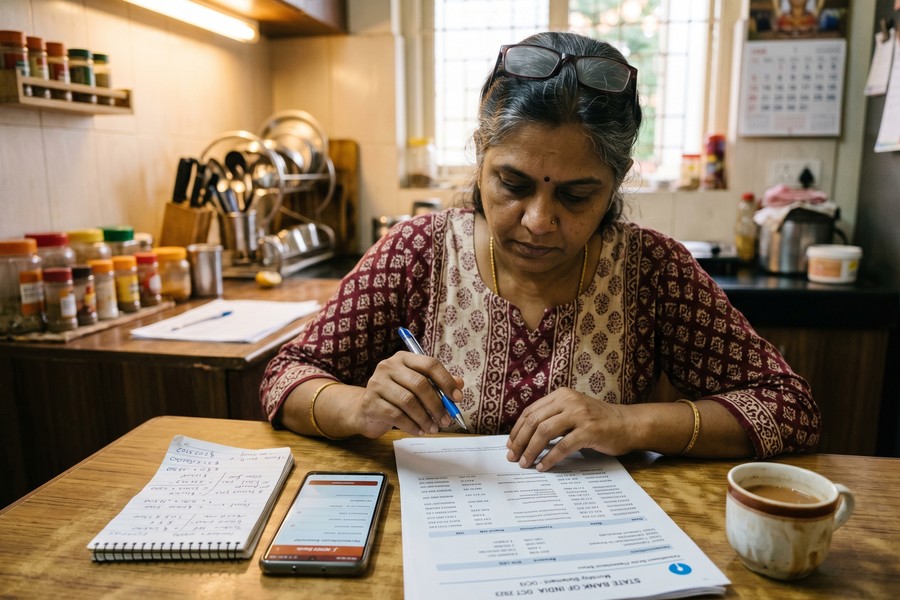
Step 5: How Do I Combine Multiple Funding Sources to Cover the Full Cost?
The most financially successful international students treat funding like a portfolio — they stack scholarships, loans, and earned income in a specific order to minimize total debt. This “funding stack” approach is the core strategy behind financing a full US degree without federal aid.
How to Do This
Build your stack in this priority order, from lowest cost to highest:
- University institutional grants and scholarships — free money, no repayment required. Maximize this first.
- External scholarships — organizations like the Fulbright Program, Rotary Foundation, and country-specific programs (e.g., Chevening for UK students studying in the US) offer non-repayable awards ranging from $5,000 to full funding.
- On-campus employment — F-1 students may work up to 20 hours per week during the academic year under ICE regulations, earning typically $10 to $18 per hour depending on the campus role and location.
- Home-country education loans — lower interest rates in many cases, no US credit requirement.
- US private lenders (no cosigner) — MPOWER or Prodigy Finance to fill the remaining gap.
- US private lenders (with cosigner) — only if you have a qualified US cosigner and the above sources fall short.
To calculate your exact funding gap, take the published Cost of Attendance (COA) from the university’s financial aid page. Subtract each funding source in priority order until you reach your borrowing floor — the minimum loan amount you actually need.
This same stacking mindset applies across personal finance scenarios. For example, our guide on whether to pay off debt or build an emergency fund first illustrates how prioritization order dramatically changes financial outcomes — the same logic applies here to funding sources.
“Students who enter the US with a diversified, pre-arranged funding stack consistently graduate with lower debt burdens than those who rely on a single large loan. The math is straightforward — every dollar of scholarship or earnings replaces a dollar of interest-bearing debt.”
What to Watch Out For
Do not count on Curricular Practical Training (CPT) or Optional Practical Training (OPT) employment income when building your upfront funding plan. CPT and OPT work authorization depends on your program status and advisor approval — it is not guaranteed in year one and cannot be used to secure a loan in advance.
Some universities allow international students to work as resident advisors (RAs) in exchange for free housing — a benefit worth $8,000 to $15,000 per year at many schools. This dramatically reduces your cost of attendance without adding loan debt or consuming your 20-hour on-campus work allowance.
Step 6: How Do International Students Repay Private Student Loans After Graduation?
Repaying student loans international students borrowed from private US lenders requires a plan that accounts for visa status changes, potential relocation, and currency risk. Starting repayment planning before graduation — not after — prevents costly defaults.
How to Do This
Most private lenders offer a 6-month grace period after graduation before full repayment begins. Use this window to either secure employment in the US under OPT (which provides up to 12 months of work authorization, extendable to 36 months for STEM graduates) or arrange international wire payment if you return home.
Contact your lender’s international servicing team before you leave the US. Lenders like MPOWER and Prodigy Finance have established processes for borrowers repaying from outside the United States. Confirm whether your lender charges foreign transaction fees on international wire payments — some do, some do not.
If you remain in the US on an H-1B visa after OPT, your income and credit history will grow, potentially qualifying you for a refinance at a lower rate. Refinancing a 14% international student loan to 7% on a $50,000 balance saves approximately $3,500 per year in interest — a move worth exploring after 12 to 18 months of consistent US employment. Review the most common student loan repayment mistakes before you begin so you can avoid the errors that cost borrowers the most money.
What to Watch Out For
Private student loans do not have the income-driven repayment plans or forgiveness options that federal loans carry. If you face financial hardship — a job loss, visa rejection, or unexpected medical expense — contact your lender immediately about forbearance or deferment options before missing a payment. A missed payment on a private loan damages credit faster and with fewer protections than a missed federal loan payment.
Also be aware that changes to student loan forgiveness programs in 2026 affect federal borrowers only — international students with private loans are unaffected by those policy shifts, but it is still worth understanding the landscape if your status changes.

STEM OPT extension holders can work in the US for up to 36 months after graduation without an H-1B visa. This three-year window gives international graduates significant time to build US income, US credit history, and potentially refinance their student loans at substantially lower rates before returning home or transitioning to another visa status.
Frequently Asked Questions
Can international students get student loans in the US without a cosigner?
Yes. Lenders like MPOWER Financing and Prodigy Finance offer student loans to international students with no US cosigner required. These lenders evaluate your academic record, program of study, and projected post-graduation income instead of US credit history. MPOWER covers students at over 400 approved US universities, with loan limits up to $100,000 per year.
What documents do international students need to apply for a private student loan?
Most lenders require your passport, Form I-20 (issued by your university), proof of enrollment or admission letter, academic transcripts, and proof of any existing scholarship awards. Some lenders also request a resume or LinkedIn profile to assess your career trajectory. Having these documents ready in advance speeds up the underwriting process significantly.
Is it worth taking out a private loan at 13% to 15% interest for a US degree?
Whether the return on investment justifies a high-rate private loan depends entirely on your field of study and post-graduation earning potential. A computer science or engineering graduate from a ranked US university entering a salary of $90,000 to $120,000 can typically service a $50,000 private loan comfortably. A humanities degree from a lower-ranked school at the same rate requires more careful analysis before borrowing.
How many hours can international students work in the US to help pay for school?
F-1 visa holders may work up to 20 hours per week on campus during the academic semester under US Immigration and Customs Enforcement (ICE) regulations, and full-time (40 hours) during official school breaks. Off-campus work requires special authorization through Curricular Practical Training (CPT) or Optional Practical Training (OPT) and is not permitted without prior approval from your Designated School Official (DSO).
Which US universities give the most financial aid to international students?
Among universities that meet 100% of demonstrated financial need regardless of nationality, MIT, Harvard, Yale, Princeton, and Amherst College are consistently cited as the most generous. According to U.S. News data on international student financial aid, these schools provide average aid packages exceeding $60,000 per year for qualifying international students.
Can I use a home-country bank loan to pay for a US university?
Yes, and for many students it is the most cost-effective option. Indian banks like SBI, HDFC Credila, and ICICI Bank offer education loans specifically for overseas study at interest rates starting around 8% — often lower than US no-cosigner private lenders. The funds are typically disbursed in Indian rupees to your family and then wired in US dollars to your university. Confirm the lender’s wire transfer process and fees before proceeding.
What happens to my international student loan if I have to return home before finishing my degree?
Private student loans remain legally binding regardless of your location or visa status. If you leave the US before completing your degree, contact your lender immediately to discuss your options. Most lenders will work with you on a modified repayment arrangement, but the loan is not forgiven or paused automatically. Some lenders require full repayment within 60 to 90 days of leaving your enrolled program.
Should I apply for a US private student loan or a home-country loan first?
Apply for your home-country loan first if the interest rate is lower than US private alternatives and if repaying in your home currency reduces your risk exposure. Exhaust scholarships and institutional grants before drawing on any loan. Once you know your remaining funding gap after all non-loan sources, then decide whether a US private lender or a home-country bank fills it more efficiently based on rate, currency, and repayment flexibility.
Can international students refinance their student loans after getting a job in the US?
Yes. Once you are working in the US on OPT or an H-1B visa and have established US credit history, you may qualify to refinance your high-rate international student loan with lenders like Earnest, SoFi, or Laurel Road. Refinancing from 14% to 7% on a $50,000 balance reduces your total interest paid by approximately $18,000 over a 10-year term. Most lenders require at least 12 months of US employment income to approve a refinance application.
Are there scholarships specifically for international students in the US that don’t require repayment?
Yes. Several well-funded programs offer grants and fellowships that do not require repayment. The Fulbright Foreign Student Program, the Rotary Foundation Global Grant, the Aga Khan Foundation International Scholarship, and the Joint Japan/World Bank Graduate Scholarship Program all fund international students at US institutions. Award values range from $5,000 to full tuition plus stipend. Competition is high — apply in your junior year or as early as possible. For context on how first-generation and non-traditional students often miss available aid, see our guide on financial aid mistakes first-generation college students make.
Sources
- Institute of International Education — Open Doors International Student Enrollment Data
- US Department of Education Federal Student Aid — Eligibility Requirements for Non-US Citizens
- NAFSA: Association of International Educators — International Student Economic Value Tool
- US Immigration and Customs Enforcement — SEVIS Student and Exchange Visitor Program
- College Data — Colleges That Offer Financial Aid to International Students
- U.S. News and World Report — Most Financial Aid for International Students Rankings
- MPOWER Financing — International Student Loan Products and Rates
- Prodigy Finance — Graduate Student Loan Information
- The College Board — CSS Profile for Institutional Financial Aid
- Fulbright Program — Foreign Student Program Overview