

Quick Answer
As of July 2025, both the cash envelope system and zero-based budgeting work — but for different people. The cash envelope method works best for impulse spenders, while zero-based budgeting suits those with irregular income or complex finances. Most people can set up either system in under two hours, and studies show structured budgeters save an average of $200–$500 more per month than those without a system.
Choosing between cash envelope vs zero-based budgeting comes down to your spending habits, income type, and how much friction you need to stay on track. Both methods assign every dollar a purpose before the month begins, but they use very different tools to enforce that discipline. According to NerdWallet’s budgeting research, people who use a formal budgeting system are twice as likely to reach their savings goals as those who budget informally — making the choice of system genuinely consequential in July 2025.
Consumer debt in the United States reached $17.7 trillion in 2024 according to the Federal Reserve Bank of New York’s Household Debt report, and financial stress is pushing more Americans to search for proven budgeting frameworks. Both cash envelopes and zero-based budgeting have surged in popularity on financial wellness platforms, with searches for structured budgeting methods up significantly year over year.
This guide is for anyone who has tried budgeting before and failed, or who is deciding between these two popular methods for the first time. By the time you finish reading, you will know exactly which system fits your life, how to set it up in a weekend, and how to avoid the most common mistakes that cause people to quit within 30 days.
Key Takeaways
- The cash envelope system uses physical or digital envelopes to cap spending by category, making it highly effective for reducing impulse purchases according to the Consumer Financial Protection Bureau.
- Zero-based budgeting assigns every dollar of income a specific job each month, meaning your income minus all budget allocations equals exactly $0 — a framework popularized by Dave Ramsey and adopted by Fortune 500 companies.
- Research from Psychological Science found that paying with cash reduces spending by up to 18% compared to card payments due to the “pain of paying” effect.
- Zero-based budgeting is used by over 70% of CFOs at top companies as a cost-control strategy, according to Gartner’s finance research.
- Americans who budget consistently are 3x more likely to feel financially confident, per a Financial Planning Association survey.
- People who combine budgeting with an emergency fund are 57% less likely to go into debt during a financial shock, reinforcing why starting with either method immediately matters — as detailed in our guide on whether to pay off debt or build an emergency fund first.
In This Guide
- Step 1: What Is the Difference Between Cash Envelopes and Zero-Based Budgeting?
- Step 2: Which Budgeting System Actually Fits Your Lifestyle?
- Step 3: How Do I Set Up the Cash Envelope System Step by Step?
- Step 4: How Do I Start Zero-Based Budgeting From Scratch?
- Step 5: What If I Keep Going Over Budget Every Month?
- Step 6: Can I Use Both Methods Together for Better Results?
- Frequently Asked Questions
Step 1: What Is the Difference Between Cash Envelopes and Zero-Based Budgeting?
The cash envelope system and zero-based budgeting share the same goal — giving every dollar a destination — but they differ fundamentally in format, flexibility, and the type of person they serve best.
How Each Method Works
The cash envelope system, popularized by personal finance author Dave Ramsey, uses labeled envelopes (physical or digital) for each spending category. You load each envelope with its budgeted cash at the start of the month. When an envelope is empty, spending in that category stops — period.
Zero-based budgeting (ZBB) is a mathematical framework where you list every source of income, then assign every dollar to a specific category — including savings and debt payments — until the result equals zero. You are not spending everything; you are allocating everything, including money going into savings accounts.
What to Watch Out For
Many people confuse zero-based budgeting with spending all their money. It does not mean spending until you hit zero — it means your income minus your intentional allocations (spending, saving, investing, debt payoff) equals zero. This distinction is critical before you choose a system.
Zero-based budgeting was originally developed by Peter Pyhrr at Texas Instruments in the 1970s as a corporate accounting method before Dave Ramsey adapted it for personal finance households.
The cash envelope method enforces limits through physical scarcity — once cash is gone, it is gone. Zero-based budgeting enforces limits through intentional planning and tracking. One uses friction as a feature; the other uses awareness as a discipline.

Step 2: Which Budgeting System Actually Fits Your Lifestyle?
The best budgeting system is the one you will actually stick with — and the right choice depends on three factors: your income structure, your spending triggers, and your comfort with technology.
How to Choose the Right System
Use the cash envelope system if you:
- Frequently overspend on discretionary categories like food, clothing, or entertainment
- Have a steady, predictable income each month
- Respond better to tangible, physical limits than digital warnings
- Are new to budgeting and want the simplest possible system
Use zero-based budgeting if you:
- Have variable or irregular income (freelancers, gig workers, commission earners)
- Have multiple financial goals running simultaneously — debt payoff, retirement, emergency fund
- Are comfortable using apps like YNAB (You Need A Budget), EveryDollar, or spreadsheets
- Want granular control over every category rather than just high-risk spending areas
What to Watch Out For
If you earn a variable income, the cash envelope system becomes harder to manage because you cannot reliably load envelopes until your paycheck lands. Our guide on budgeting for gig workers with variable income explores this challenge in depth and offers strategies for managing unpredictable paychecks.
According to a Bankrate Financial Security survey, 56% of Americans say they could not cover a $1,000 emergency expense from savings — a problem both budgeting methods directly address by forcing savings allocations before discretionary spending.
The table below compares both methods across the dimensions that matter most for real households.
| Factor | Cash Envelope System | Zero-Based Budgeting |
|---|---|---|
| Best For | Impulse spenders, steady income earners | Planners, variable income, multiple goals |
| Setup Time | 30–45 minutes | 60–120 minutes |
| Tools Needed | Envelopes, cash, or apps like Goodbudget | YNAB ($14.99/month), EveryDollar, or spreadsheet |
| Flexibility | Low — hard limits per category | High — reallocate anytime |
| Ideal Income Type | Stable salaried or hourly | Variable, freelance, commission |
| Savings Tracking | Separate account or envelope | Built directly into the budget |
| Debt Payoff Integration | Manual — requires separate envelope | Seamless — line item in the budget |
| Overspending Risk | Very low — cash runs out | Moderate — requires honest tracking |
Step 3: How Do I Set Up the Cash Envelope System Step by Step?
Setting up the cash envelope system takes about 30 to 45 minutes and can be done entirely in a single sitting using either physical envelopes or a free digital app.
How to Do This
Follow these six steps to build your cash envelope system from scratch:
- Calculate your monthly take-home income. Use your net pay — the amount that lands in your bank account after taxes and deductions.
- List your fixed expenses first. Rent, insurance, loan payments, and subscriptions are paid by check or auto-debit — not cash. Subtract these from your income before creating envelopes.
- Identify your variable spending categories. Common envelope categories include groceries, dining out, gas, clothing, entertainment, personal care, and miscellaneous spending.
- Assign a dollar amount to each envelope. Use the previous two to three months of bank statements to set realistic limits. The CFPB’s free budget worksheet can help you analyze past spending patterns.
- Load your envelopes. On payday, withdraw the total variable spending amount in cash and sort it into labeled envelopes immediately.
- Spend only from the envelope. When the envelope is empty, that category is done for the month. If you routinely run short in one category, reallocate next month — do not borrow from other envelopes.
For a digital alternative, the Goodbudget app replicates the envelope system without cash. It allows you to assign digital “envelopes” and sync with a partner, making it ideal for couples or anyone who rarely carries physical currency.
What to Watch Out For
The biggest failure point in the cash envelope system is loading envelopes with amounts that are too aspirational. If your actual grocery spending has averaged $650 per month for the past three months, setting your envelope at $400 will cause frustration and system abandonment within weeks. Start realistic, then reduce gradually.
Create a “miscellaneous” envelope with 5–10% of your variable spending budget. This catch-all prevents you from raiding other envelopes for unexpected small purchases like parking fees, co-pays, or pet supplies.
“The envelope system works because it creates a real psychological boundary. Once the money is gone, the decision is made for you. That’s the entire point — you’re removing willpower from the equation entirely.”
Step 4: How Do I Start Zero-Based Budgeting From Scratch?
Zero-based budgeting requires listing every dollar of income and assigning it a specific category until the remaining balance equals zero — every single month, before the month begins.
How to Do This
Here is the exact process for building your first zero-based budget:
- List all income sources. Include your salary, side hustle income, rental income, child support, or any recurring deposits. Use your lowest expected monthly income if your earnings vary.
- List all fixed expenses. Rent or mortgage, car payments, insurance premiums, minimum debt payments, and subscriptions with set monthly amounts.
- List all variable expenses. Groceries, utilities, gas, dining out, clothing, entertainment, and personal care — categories where the amount changes month to month.
- Add savings and debt payoff goals as line items. Emergency fund contributions, retirement account deposits, and extra debt payments are not afterthoughts — they are budget categories that get funded before discretionary spending.
- Subtract all categories from income. The result should equal zero. If you have money left over, assign it to a category (savings, investing, or debt). If you are in the negative, trim categories until you reach zero.
- Track spending throughout the month. Use YNAB, EveryDollar, or a Google Sheets template and update it every time money moves. The budget only works if it reflects reality.
The YNAB (You Need A Budget) platform is the most widely used tool for zero-based budgeting, with over 3 million users reporting an average savings of $600 in the first two months according to YNAB’s own user data. EveryDollar, created by Ramsey Solutions, offers a free version and a premium tier at $17.99 per month.
What to Watch Out For
First-time zero-based budgeters often forget irregular expenses — car registration, annual insurance premiums, holiday gifts, and back-to-school costs. Divide these annual or semi-annual expenses by 12 and budget for them monthly in a “sinking fund” category so the payment never blindsides you.
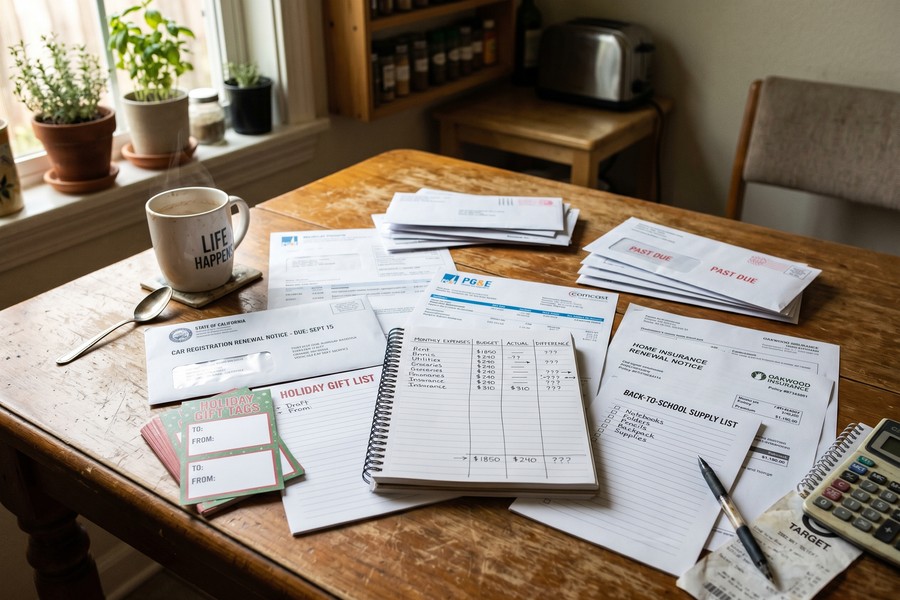
If you skip rebuilding your zero-based budget at the start of each month, you are no longer zero-based budgeting — you are just tracking last month’s plan against this month’s spending. The system only works when each month starts fresh with a new plan.
Understanding your net worth alongside your monthly budget gives zero-based budgeting more context. Our article on net worth vs. income and which number actually matters for building wealth explains why tracking assets and liabilities alongside your budget creates a more complete financial picture.
Step 5: What If I Keep Going Over Budget Every Month?
Going over budget consistently is not a character flaw — it is almost always a sign that your budget categories are wrong, not that the system is broken.
How to Diagnose and Fix Budget Failures
If you are overspending repeatedly, work through this diagnostic checklist:
- Check if your baseline is realistic. Pull three months of bank and credit card statements and calculate your actual average spending in each category. Most people underestimate grocery and dining budgets by 20–35%.
- Look for missing categories. Forgotten categories — pet expenses, personal care, Amazon miscellaneous — often cause “mystery” overspending that people attribute to the wrong line item.
- Identify your highest-risk category. For most people, dining out, online shopping, or subscription creep is the primary leak. Address that one category first before tweaking the rest.
- Switch systems if needed. If you are failing at zero-based budgeting due to lack of friction, adding cash envelopes for your two or three most problematic categories often solves the problem immediately.
What to Watch Out For
Do not restart your budget from zero after a bad month. Instead, review what went wrong, adjust the affected categories, and continue. The average person takes three to four months to dial in a budget that actually reflects their real life.
“Most budget failures happen in month one or two because people build an aspirational budget rather than an honest one. I always tell clients to track first for 30 days without changing a thing, then build the budget from real data.”
If debt payments are consuming a large share of your budget and crowding out savings allocations, it may also be worth reviewing our guide on whether you should pay off debt or build an emergency fund first — a decision that directly affects how much breathing room your budget has each month.
Use a “budget buffer” line item of $50–$100 per month labeled “oops money.” This small cushion prevents one small overage from derailing your entire month’s plan — and it can be moved to savings if unused.
Step 6: Can I Use Both Methods Together for Better Results?
Yes — using cash envelopes for high-risk discretionary categories while using zero-based budgeting as the overall framework is one of the most effective hybrid approaches in personal finance.
How to Build a Hybrid System
Here is how to combine both methods without creating complexity:
- Build a full zero-based budget first. Account for every dollar of income across all categories — fixed expenses, savings, debt, and variable spending.
- Identify your two or three highest-risk spending categories. These are the areas where you consistently overspend or lose track of money.
- Assign those categories to cash envelopes. Withdraw exactly the budgeted amount in cash or use a digital envelope app for those specific categories only.
- Leave all other spending on your debit or credit card and track it against your zero-based budget in your chosen app or spreadsheet.
This hybrid approach gives you the psychological friction of cash envelopes where you need it most, while retaining the strategic overview of zero-based budgeting for savings, debt payoff, and long-term goal planning.
What to Watch Out For
The hybrid system adds a small layer of complexity — you are maintaining two tracking methods simultaneously. Keep it simple by limiting cash envelopes to no more than three categories. If you find yourself managing more than five envelopes on top of a full zero-based budget, consider switching entirely to a digital zero-based budgeting app with sub-category tracking.

Understanding how all your financial commitments interact — including any loan payments — is essential when choosing a budgeting method. If you are evaluating whether loan-related financial decisions fit your budget, our breakdown of the financial moves you should be making in your 30s provides broader context for how budgeting connects to long-term wealth building.
The hybrid approach to cash envelope vs zero-based budgeting is what many certified financial planners quietly recommend to clients — not one rigid system, but the strategic combination of both based on individual spending weaknesses.
Frequently Asked Questions
Is the cash envelope system better than zero-based budgeting for paying off debt?
Zero-based budgeting is generally more effective for debt payoff because it treats debt payments as a budget category that gets funded first, before any discretionary spending. The cash envelope system can support debt payoff but requires a separate envelope or account specifically designated for extra payments, which many people forget to fund consistently. For structured debt elimination, zero-based budgeting integrates seamlessly with methods like the debt snowball or debt avalanche.
Can I do the cash envelope system if I pay most of my bills online?
Yes — the cash envelope system works best when applied only to variable, discretionary spending categories like groceries, dining out, gas, and entertainment. Fixed bills paid online — rent, insurance, utilities, and loan payments — remain on autopay and are simply subtracted from your income before you load your envelopes. You do not need to use cash for everything, only for the categories where you tend to overspend.
What is the best app for zero-based budgeting in 2025?
YNAB (You Need A Budget) is the leading zero-based budgeting app in 2025, priced at $14.99 per month or $99 per year, with new users reporting average savings of $600 in the first two months according to YNAB’s user data. EveryDollar by Ramsey Solutions offers a free tier with manual entry and a paid tier at $17.99 per month for bank syncing. For those who prefer spreadsheets, Google Sheets with a free ZBB template is a zero-cost option that works well for disciplined manual trackers.
How do I use zero-based budgeting when my income changes every month?
Budget using your lowest expected monthly income as the baseline, then treat any income above that as a bonus to be allocated when it arrives. List your essential expenses — housing, utilities, food, minimum debt payments — first, and fund those before anything else. Our guide on budgeting for gig workers with variable income covers this exact scenario with specific strategies for irregular earners.
How much cash should I put in each envelope?
Base your envelope amounts on your actual average spending over the past two to three months — not what you wish you spent. Pull your bank and credit card statements, calculate the real monthly average per category, and use that as your starting point. Most financial coaches recommend reducing each envelope by no more than 10–15% from your actual average in the first month to avoid system shock that leads to abandonment.
Does the cash envelope system work for couples or families?
Yes, but it requires an explicit agreement on who manages which envelopes and how shared purchases are handled. Many couples use one set of joint envelopes for household categories (groceries, dining, household supplies) and separate personal envelopes for individual discretionary spending. Digital apps like Goodbudget allow envelope syncing between two users, making the system practical for couples who rarely carry cash.
What happens if I run out of cash in an envelope before the month ends?
When a cash envelope is empty, spending in that category stops for the month — that is the system working as designed. If you run out regularly in the same category, it means your budgeted amount is too low and needs to be adjusted next month. As a one-time exception, you may transfer money from a non-essential envelope (like entertainment) to cover a genuine need, but this should be the exception rather than the rule.
Is zero-based budgeting too time-consuming for busy people?
The initial setup takes 60 to 120 minutes, but monthly maintenance typically requires only 30 minutes at month-start plus 5–10 minutes of daily or weekly transaction updates. Apps like YNAB and EveryDollar dramatically reduce maintenance time through bank sync and automatic transaction import. The time investment is front-loaded — once the framework is built, maintaining it becomes a brief habit rather than a chore.
Should a first-time budgeter start with cash envelopes or zero-based budgeting?
First-time budgeters typically find the cash envelope system easier to understand and implement because its rules are simple: spend from the envelope, stop when it is empty. Zero-based budgeting has a slightly steeper learning curve because it requires tracking all spending and rebuilding the plan each month. If you have never budgeted before, start with cash envelopes for one to two months to build the habit, then graduate to zero-based budgeting once you understand your spending patterns.
Can cash envelope vs zero-based budgeting help me build an emergency fund faster?
Both methods accelerate emergency fund growth because they eliminate the unconscious “leaking” of money into unplanned spending. Zero-based budgeting is particularly powerful here because it creates a dedicated emergency fund line item that gets funded before discretionary spending. According to the CFPB, people with a written budget save at a significantly higher rate than those without one. Pairing either method with automatic transfers to a high-yield savings account maximizes the impact.
Sources
- Federal Reserve Bank of New York — Household Debt and Credit Report
- Consumer Financial Protection Bureau — Make a Budget
- NerdWallet — How to Budget: A Step-by-Step Guide
- Bankrate — Financial Security Survey: Emergency Savings
- YNAB (You Need A Budget) — The Four Rules and User Savings Data
- Association for Psychological Science — Using Cash Makes You Feel the Pain of Paying
- Gartner — Zero-Based Budgeting Insights for Finance Leaders
- Financial Planning Association — Financial Confidence and Budgeting Research
- Ramsey Solutions — The Cash Envelope System Explained
- Investopedia — Zero-Based Budgeting: What It Is and How to Use It