

The Verdict
Aggressive auto loan payoff strategies are worth pursuing if your interest rate is above 6% and you have no high-rate credit card debt to clear first. They are not worth it if your loan carries a precomputed interest structure or a prepayment penalty, since extra payments may save you nothing—or cost you more.
The single factor that determines how much any payoff strategy can save you is whether your loan uses simple interest or precomputed interest. With a simple-interest loan, every extra dollar applied to principal immediately reduces future interest charges. With precomputed interest, the total interest is fixed at origination and your early payments change very little. According to the Consumer Financial Protection Bureau, paying down principal faster directly reduces the total interest you owe—but only on simple-interest loans. Most auto loan payoff strategies assume this structure, and borrowers who skip that check often wonder why their balance barely moved. As of early 2025, Federal Reserve data shows the average interest rate on a new 48-month auto loan sitting near 8.4%, meaning the stakes are real for most current borrowers.
With vehicle loan balances stretching longer than ever, the cost of a passive payoff approach compounds quietly. Choosing the right strategy now, rather than defaulting to the minimum payment, can mean the difference between paying off a $30,000 vehicle on schedule or writing an extra $2,000-plus check to your lender over the life of the loan.
| Factor | Reasons to Pursue Early Payoff | Reasons to Stick to Scheduled Payments |
|---|---|---|
| Interest rate | Rate above 6%: extra payments deliver meaningful savings | Rate below 4%: savings barely beat inflation or a savings account yield |
| Loan structure | Simple-interest loan: every extra payment cuts principal immediately | Precomputed-interest loan: early payments may not reduce interest owed |
| Prepayment penalty | No penalty clause: full savings pass to you | Penalty exists: fee can erase 6-12 months of interest savings |
| Other debt | No high-rate debt above 18%: auto loan is your costliest obligation | Credit card balance at 22%+ exists: that debt costs more per dollar |
| Equity position | Underwater on vehicle: extra payments rebuild equity faster | Already above water: urgency is lower; investing may win |
| Cash reserves | Emergency fund fully funded at 3-6 months of expenses | Emergency fund below $1,000: extra cash should build the cushion first |
Key Takeaways
- Early payoff is likely the right move if your auto loan rate is at least 6% and your loan uses a simple-interest calculation.
- Confirm there is no prepayment penalty by reviewing your Truth in Lending disclosure before sending a single extra dollar, as the CFPB recommends negotiating this clause out before signing.
- Biweekly payments produce the equivalent of one extra full payment per year without requiring a lump sum, making it the lowest-friction strategy for most borrowers.
- Lump-sum payoffs save the most total interest of any single action, but only if your cash reserves remain above three months of living expenses afterward.
- If you carry credit card debt above 18% APR, that obligation costs more per dollar than almost any auto loan—eliminate it first.
- Loan terms of 72 or 84 months amplify interest costs dramatically; borrowers on long terms benefit most from an accelerated payoff approach.
- Rounding up monthly payments by even $50-$100 can reduce a 60-month loan’s total interest cost by several hundred dollars with no lifestyle disruption.
Does Your Loan Structure Actually Allow Interest Savings?
Simple-interest auto loans are the only type where payoff strategies deliver real savings, and most loans originated through banks and credit unions use this structure. On a precomputed-interest loan, the lender calculates the total interest at the start, folds it into the balance, and each payment chips away at a pre-set total—meaning extra payments usually just accelerate the schedule without reducing the interest charge.
Chase Auto’s consumer education page states this clearly: interest savings from early payoff strategies only apply to simple-interest loans, not precomputed-interest ones, making loan type the critical factor to verify before pursuing early payoff. If you financed through a buy-here-pay-here dealer or a smaller consumer finance company, there is a meaningful chance your contract uses precomputed interest.
The check is straightforward. Pull your original loan agreement or the Truth in Lending disclosure your lender was required to provide under Regulation Z, Section 1026.18. Look for language describing how interest accrues daily on the outstanding balance. If you see a single, fixed “finance charge” or “total of payments” figure that does not change with early payoff, you likely have a precomputed loan. Contact your lender directly to confirm before changing your payment behavior.
Which Payoff Strategy Actually Saves the Most?
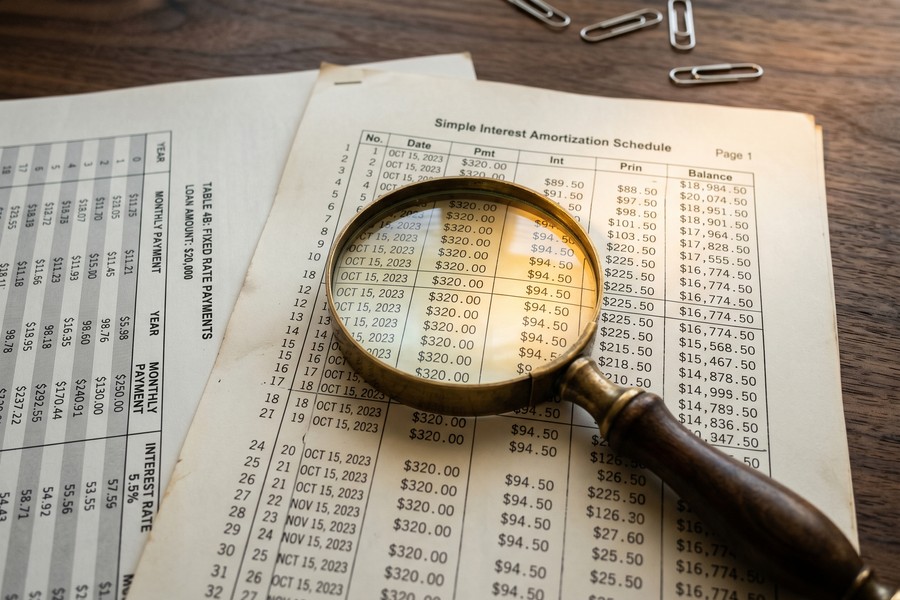
Among the three main approaches—lump-sum payoff, biweekly payments, and monthly payment rounding—lump-sum payoff saves the most total interest because it eliminates the largest chunk of principal at once, slashing the balance on which daily interest accrues. The other two strategies save meaningfully less per dollar deployed, but they work for borrowers who cannot spare a windfall.
Lump-Sum Payoff
Directing a bonus, tax refund, or savings toward the principal in a single payment produces the steepest interest reduction. On a $25,000 loan at 8% APR with 48 months remaining, applying a $5,000 lump sum to principal in month one saves roughly $1,100 in interest over the remaining term, based on standard amortization math. The CFPB confirms that paying down the principal faster directly reduces total interest on a simple-interest loan. Always instruct your lender in writing to apply the payment to principal only, not to future scheduled payments.
Biweekly Payments
Splitting your monthly payment in half and paying every two weeks results in 26 half-payments per year, which equals 13 full monthly payments instead of 12. That one extra payment per year consistently cuts a 60-month loan to roughly 54-55 months on a mid-rate loan, with proportional interest savings. This strategy requires no discipline beyond setting up an automatic transfer, making it the most practical option for borrowers who do not have a lump sum available. Confirm your lender accepts biweekly payments and applies them immediately to principal; some servicers hold the funds until the next due date, negating the benefit entirely.
Monthly Payment Rounding
Rounding up each payment to the nearest $50 or $100 is the lowest-impact strategy but still compounds over time. On the same $25,000, 8% loan, adding $75 per month shaves roughly 7-8 months off the repayment schedule and saves around $600 in interest. It lacks the drama of a lump-sum payoff, but for borrowers managing a tight budget, it is far better than the alternative of doing nothing for 60 months. Understanding exactly how interest compounds on your balance month to month makes it easier to see why even modest extra payments matter; for a detailed breakdown of the mechanics, see our guide on how auto loan interest is calculated and what it really costs you over time.
Do Prepayment Penalties Wipe Out Your Savings?
A prepayment penalty can eliminate months of careful extra payments in a single fee, so confirming whether one exists is not optional. The CFPB advises that prepayment penalties on auto loans are designed to discourage early payoff, and it specifically recommends reviewing your Truth in Lending disclosures and negotiating to remove any prepayment penalty clause before signing the contract. Under CFPB guidance on prepayment, lenders are required to disclose whether a penalty applies.
Prepayment penalties are less common on auto loans than on mortgages, but they do appear, particularly in contracts originated through indirect lending channels like dealership financing. Federal Regulation Z, specifically Section 1026.18(k), requires lenders to disclose in writing whether a prepayment penalty may be charged. If your contract was signed without careful review, check the payoff section now. A penalty structured as a percentage of the remaining balance—even a flat 2%—on a $20,000 balance equals $400, which can erase half a year of extra payments on a low-rate loan. If you are still shopping for a vehicle, understanding common dealership financing mistakes can help you spot and negotiate this clause before you sign.
Is Early Auto Loan Payoff the Best Use of Your Extra Cash?
Paying off your auto loan early is not always the highest-return move for every extra dollar, and the answer depends on your rate relative to alternatives. If your loan rate is 5% or below and you have access to a high-yield savings account paying 4.5% or an investment account with a long-term expected return above 7%, the math may favor holding the loan and deploying the cash elsewhere.
The calculus flips at higher rates. With the average new auto loan rate near 8.4% as of early 2025, paying down that balance carries a guaranteed return equal to the rate—no market risk required. That beats a savings account yield on a risk-adjusted basis for most borrowers. The question of whether to pay off the loan or invest the extra cash is worth working through carefully; our article on whether to pay off your auto loan early or invest the extra cash runs through the comparison in detail.
Emergency reserves change the calculus further. Deploying savings aggressively against a car loan and then facing a $3,000 repair bill with no cushion forces you into high-rate borrowing that undoes the savings entirely. Keep at least three months of essential expenses liquid before accelerating any debt payoff. For a broader framework on how to prioritize between debt payoff and financial cushions, our guide on whether to pay off debt or build an emergency fund first lays out the decision clearly.

Are Longer Loan Terms the Bigger Problem to Solve First?
If your loan runs 72 or 84 months, the interest drag is severe enough that any payoff strategy delivers outsized savings compared to a 48-month loan at the same rate. The CFPB’s Know Before You Owe auto loan guide explicitly warns that lowering monthly payments by extending the loan term increases total interest paid and raises the risk of negative equity. A borrower who took a 84-month loan at 9% on a $30,000 vehicle will pay roughly $12,000 in total interest over the life of the loan—versus around $6,400 on a 48-month term at the same rate.
For borrowers locked into a long-term loan, refinancing to a shorter term can work alongside extra payments. Refinancing only makes financial sense if you can lower your rate by a meaningful margin and the loan has not already amortized past the midpoint. Once you are past the halfway mark, most of the interest has already been paid and the benefit of refinancing shrinks considerably. When weighing the tradeoffs between loan sources before refinancing, comparing online auto loan lenders against traditional banks can surface rate differences worth acting on.
Who Should and Who Should Not Pursue Aggressive Payoff Strategies
Good candidates
Borrowers in these situations will see the clearest financial benefit from prioritizing early payoff.
- Borrowers with a simple-interest loan at 7% or higher and no credit card debt above 18%, where the auto loan is effectively the most expensive obligation they carry.
- Anyone on a 72 or 84-month term who has not yet crossed the midpoint of the loan; the remaining interest to be saved is still substantial.
- Borrowers who are currently underwater on their vehicle (loan balance exceeds the car’s market value) and want to rebuild equity faster to protect against loss if the car is totaled.
- Individuals who receive irregular windfalls, such as annual bonuses or tax refunds, and can apply lump sums without disrupting monthly cash flow.
Who should skip it
For these borrowers, redirecting extra cash elsewhere will produce a better financial outcome.
- Anyone with a precomputed-interest loan where extra payments will not reduce the fixed interest charge already baked into the contract.
- Borrowers carrying credit card balances at 20% APR or above; the guaranteed return from eliminating that debt exceeds what auto loan payoff saves, dollar for dollar.
- Those with a low-rate loan under 4% originated during the 2020-2021 low-rate period; at that cost, a high-yield savings account or indexed investment fund likely outperforms the payoff math.
- Borrowers whose emergency fund is below $1,500; aggressive debt payoff without a cash buffer creates fragility that can reverse financial progress quickly.
Frequently Asked Questions
What is the fastest way to pay off a car loan and save the most interest?
A lump-sum principal payment saves the most interest of any single action because it immediately reduces the balance on which daily interest accrues. If you do not have a lump sum available, switching to biweekly payments is the next most effective method, generating one extra full payment per year with minimal budget impact.
Does paying extra on a car loan actually reduce interest?
Yes, but only if you have a simple-interest auto loan, which most bank and credit union loans are. On a simple-interest loan, every extra dollar applied to principal reduces the balance and therefore the amount of interest that accrues going forward. On a precomputed-interest loan, the total interest charge is fixed at origination and extra payments typically do not reduce it.
Is it worth paying off a car loan early if there is a prepayment penalty?
Usually not, unless the interest savings over the remaining term exceed the penalty amount. Run the numbers by calculating the total remaining interest at your current schedule versus the early payoff cost plus any penalty fee. If the gap is small, the penalty likely wipes out the benefit.
Should I pay off my car loan or invest the money?
If your loan rate is above 6-7%, paying it off carries a guaranteed, risk-free return that competes favorably with most savings vehicles and slightly trails long-term equity investment returns. Below that threshold, a well-allocated investment account or high-yield savings account may produce better results. The decision also depends on your time horizon and risk tolerance.
How do biweekly car payments work and do they actually save money?
Biweekly payments work by splitting your monthly payment in half and paying every two weeks, which produces 26 half-payments per year instead of the 24 that 12 monthly payments would equal. That translates to one extra full payment annually, which shortens the loan term and reduces total interest paid. Make sure your lender applies each payment immediately rather than holding the second half-payment until the due date.
Can I ask my lender to remove a prepayment penalty?
Yes, and the CFPB recommends trying to negotiate this clause out before signing. If the loan is already in place, some lenders will waive or reduce the penalty as a goodwill gesture, especially if you are a long-standing customer. Your leverage is higher before signing than after, so reviewing the Truth in Lending disclosure at closing is essential.
Sources
- Consumer Financial Protection Bureau — Is it better to pay off interest or principal on my auto loan?
- Consumer Financial Protection Bureau — Can I prepay my loan at any time without penalty?
- Consumer Financial Protection Bureau — Know Before You Owe: Auto Loans Guide
- Consumer Financial Protection Bureau — Regulation Z, Truth in Lending, Section 1026.18
- Chase Auto (JPMorgan Chase Bank, N.A.) — The Pros and Cons of Paying Off a Car Loan Early
- Federal Reserve — Consumer Credit Statistical Release (G.19)
- Experian — State of the Automotive Finance Market Report